
Research, evidence & responsible useNumerology guide
Bank and Payment Number Numerology: Protect Your Financial Details
A numerology reading never needs your bank login, PIN, OTP, CVV, or payment approval. Learn how to explain number symbolism with fictional data and spot unsafe requests.
The short answer
Start here
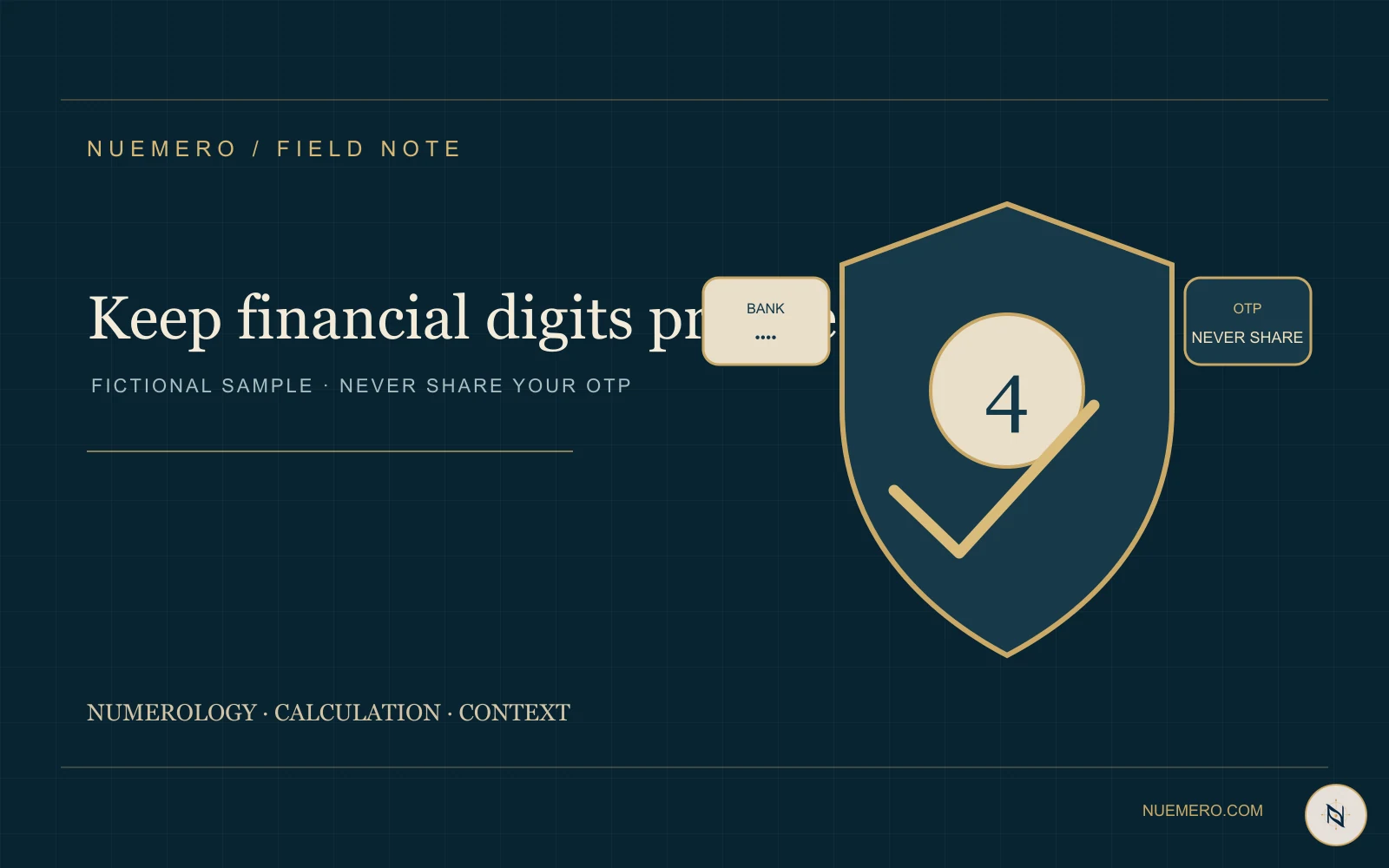
A numerology calculation can be demonstrated with a fictional digit string. Never disclose a bank password, UPI PIN, card PIN, CVV, OTP, recovery code, or approve a payment because someone promises a lucky number or reading. The Reserve Bank of India warns people not to share credentials such as OTPs and PINs. A bank account number is not the same as an authentication credential, but it is still personal financial information: share it only for a legitimate purpose with a verified recipient. Do not send screenshots that reveal balances, account details, or transaction IDs to a numerology service.
Key takeaways
A numerology example needs no real bank, card, or payment credentials.
Never share an OTP, PIN, password, CVV, or approve a payment to receive a reading.
Use fictional sample digits and crop or redact screenshots before sharing.
On this page
Share a safe, fictional example
If a calculator asks for a long financial number, replace it with a clearly labeled sample before testing the arithmetic. If you want to discuss a real result, share only a short derived total such as 4, not the underlying account string. Remove account names, bank logos, balances, transaction references, QR codes, and contact details from screenshots.
If you already shared a secret credential, contact your bank through its official app, website, or phone number immediately; change the credential and follow the bank's fraud-reporting instructions. Do not call a number supplied in the suspicious message.
Method and limits
This guide describes the conventions stated above and the way Nuemero’s current calculator works. Numerology interpretations are traditional beliefs, not scientific predictions. Check a source’s method before applying its meanings.
Read Nuemero’s full methodQuick answers
Frequently asked questions
Is it safe to enter my bank account number into a numerology calculator?
A real account number is unnecessary for learning a digit-sum rule. Use a fictional sample; share real financial identifiers only with a verified service for a legitimate reason.
Should I share an OTP or UPI PIN for a lucky-number reading?
Never. A reading cannot require an OTP, PIN, password, CVV, or payment approval. Contact your bank via its official channel if someone requests one.
Can I calculate a number from fictional digits?
Yes. A fictional sequence is enough to demonstrate addition and reduction without exposing financial information.
Read further
Sources and method notes
- Reserve Bank of India: Safeguards for digital bankingOfficial guidance not to disclose credentials such as password, PIN, OTP, CVV, or UPI PIN.
- Reserve Bank of India: Financial Awareness MessagesOfficial awareness material reinforcing that customers should not share OTPs and should protect their payment credentials.
Sources document calculation conventions and claims made within their traditions. They are not evidence that numerology predicts real-world outcomes.
Research, evidence & responsible use·8 min
Mobile Number Numerology and Privacy: Use a Sample, Keep Your Number Private
Learn why phone-number numerology formulas differ, how to calculate with a fictional example, and why a real phone number should not be posted in public tools.
Read the guide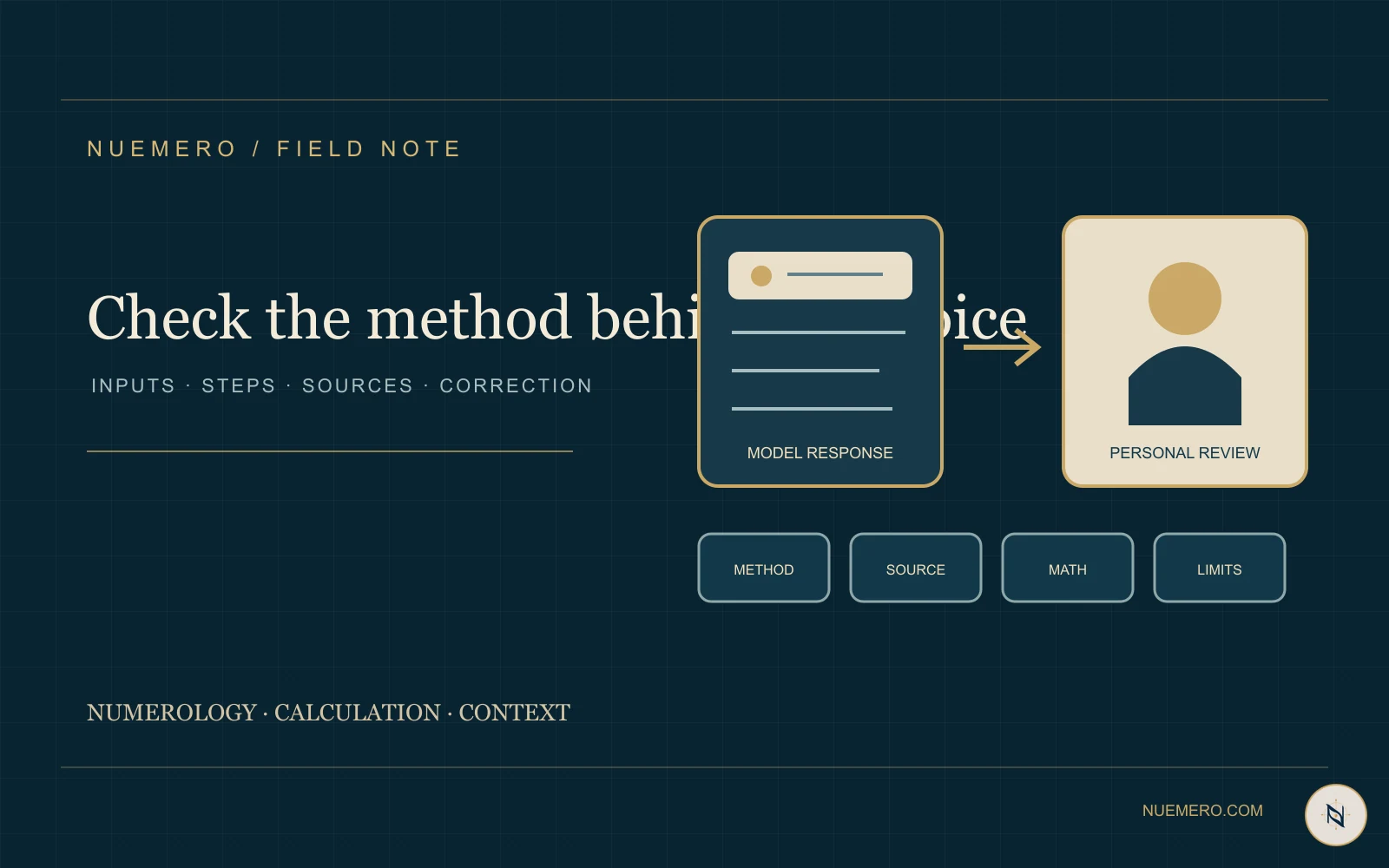
Research, evidence & responsible use·8 min
AI vs Human Numerology Readings: Compare the Work, Not the Mystique
Compare calculators, AI explanations, and practitioner conversations by arithmetic, sources, clarification, privacy, and uncertainty—not by an assumed guarantee.
Read the guide