
Work, business & daily lifeNumerology guide
Career Themes by Mulank 1–9: Reflection, Not a Job Match
Explore traditional career themes linked to Mulank 1–9, then test them against your actual skills, interests, training, and work conditions instead of treating a number as a career test.

The short answer
Start here
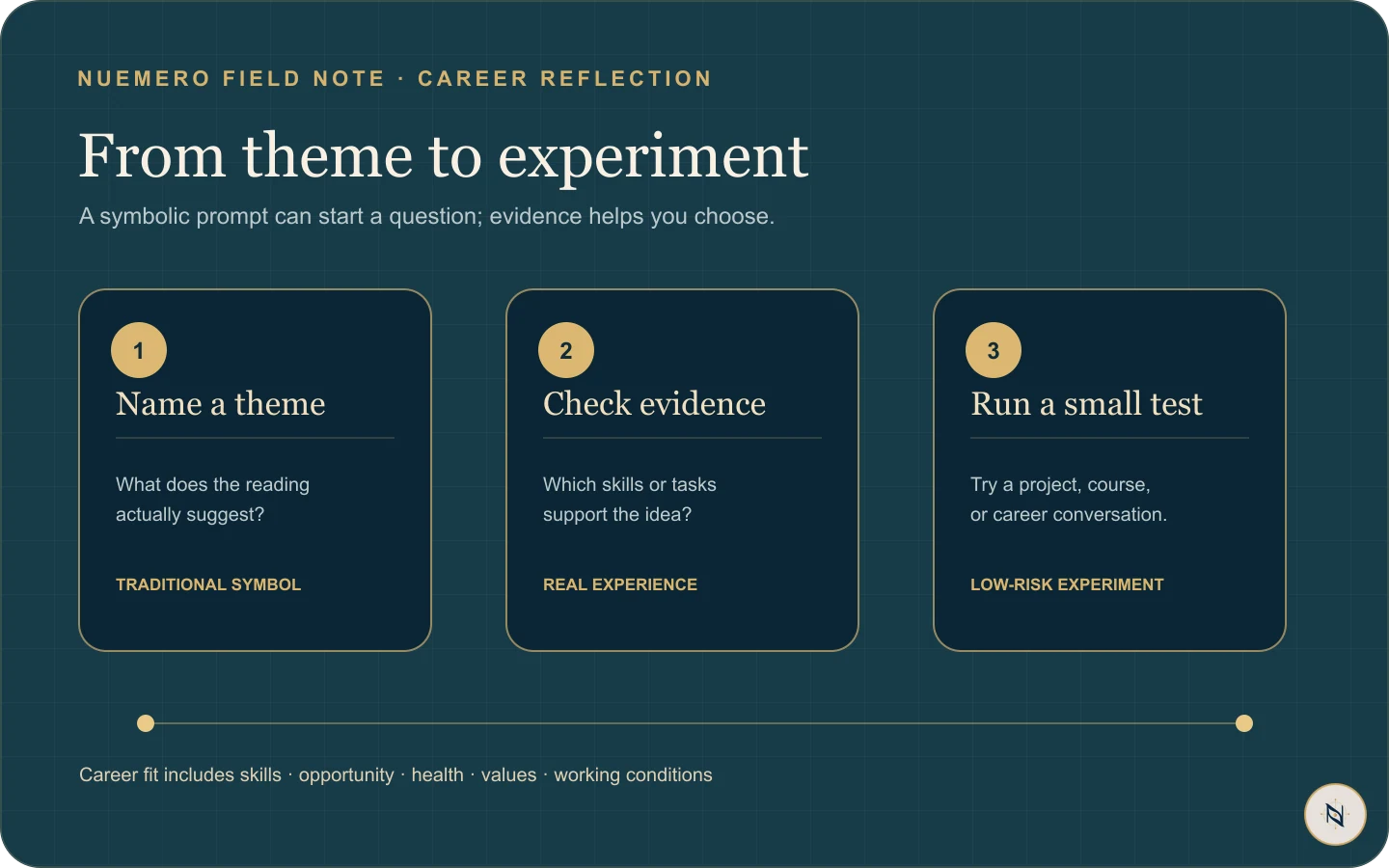
Some numerology writers associate Mulank themes with work styles, but no day number can identify a best career or reliably predict job success. Use symbolic associations only to generate questions: what tasks energize you, which skills do you want to build, and what conditions do you need? Then research occupations and test fit through real experience.
Key takeaways
Numerology cannot establish one ideal career for a person.
Themes can prompt questions about tasks, collaboration, structure, and learning.
Compare interests and skills with real occupational information and experience.
Never use a number to screen candidates, set pay, or limit someone's options.
On this page
What Mulank can and cannot tell you
A common day-only Mulank method reduces the calendar day: 23 becomes 5; the full-date Life Path is a separate calculation. Traditional writers may connect numbers to broad work themes—initiative, teamwork, expression, systems, variety, care, research, management, or service. Those themes are neither exclusive nor measured career aptitudes. Label them as symbolic prompts and avoid a single “best job” list that turns a tradition into false precision.
Turn a theme into a real test
Turn a theme into a testable question. If collaboration resonates, ask which team tasks you enjoy and which drain you. If structure resonates, examine whether you prefer clear procedures or open-ended problems. Record examples from study, volunteering, projects, or paid work; ask a trusted colleague for specific feedback. A number is the starting prompt only—the evidence comes from your own behavior and preferences.
Research the actual role
For concrete options, compare real job tasks, required skills, entry routes, training cost, location, pay range, accessibility, and day-to-day conditions. Try a small project, informational interview, course sample, or volunteer assignment before making an expensive change. A numerology reading must not influence hiring, promotion, wages, or anyone else's opportunity; those decisions require fair, role-related evidence.
- Use Mulank as a journaling prompt, not a career assignment.
- Compare your skills and interests with the daily tasks of real occupations.
- Try an informational interview or sample project before committing resources.
Method and limits
This guide describes the conventions stated above and the way Nuemero’s current calculator works. Numerology interpretations are traditional beliefs, not scientific predictions. Check a source’s method before applying its meanings.
Read Nuemero’s full methodQuick answers
Frequently asked questions
Can Mulank tell me the best career?
No reliable career test follows from a birth-day number. Use interests, skills, work samples, and real occupational information.
What are common career themes for Mulank 1–9?
Writers associate numbers with broad symbolic qualities, but descriptions vary and do not identify a suitable job. This guide uses them only as reflection prompts.
Can employers use Mulank to hire or promote?
No. Hiring and promotion should use fair, role-related evidence, not birth-date numerology.
How can I explore careers practically?
Compare job tasks, skills, training, conditions, and local opportunities. Try a sample project or speak with someone in the role.
Read further
Sources and method notes
- O*NET · My Next Move career explorationA U.S.-focused resource for exploring tasks and skills; also check local job requirements and opportunities.
Sources document calculation conventions and claims made within their traditions. They are not evidence that numerology predicts real-world outcomes.
Work, business & daily life·7 min
Career Numerology by Date of Birth: A Reflection Guide, Not a Job Test
Use numerology themes as prompts for career reflection, then test ideas against skills, working conditions, and real-world evidence—not a deterministic job prediction.
Read the guide
Work, business & daily life·8 min
Numerology for a Job Change or Promotion: Reflect, Then Check the Offer
Use a cycle reading to surface questions about change, while comparing role, pay, benefits, manager, growth, and risk with real evidence.
Read the guide