
Number meanings & traditionsNumerology guide
Karmic Debt Numbers 13, 14, 16, and 19: Traditional Meanings Without Fear
Learn where modern numerology assigns karmic-debt meanings to 13, 14, 16, and 19, how compound-number rules vary, and why these labels should never be used to blame or frighten someone.
The short answer
Start here
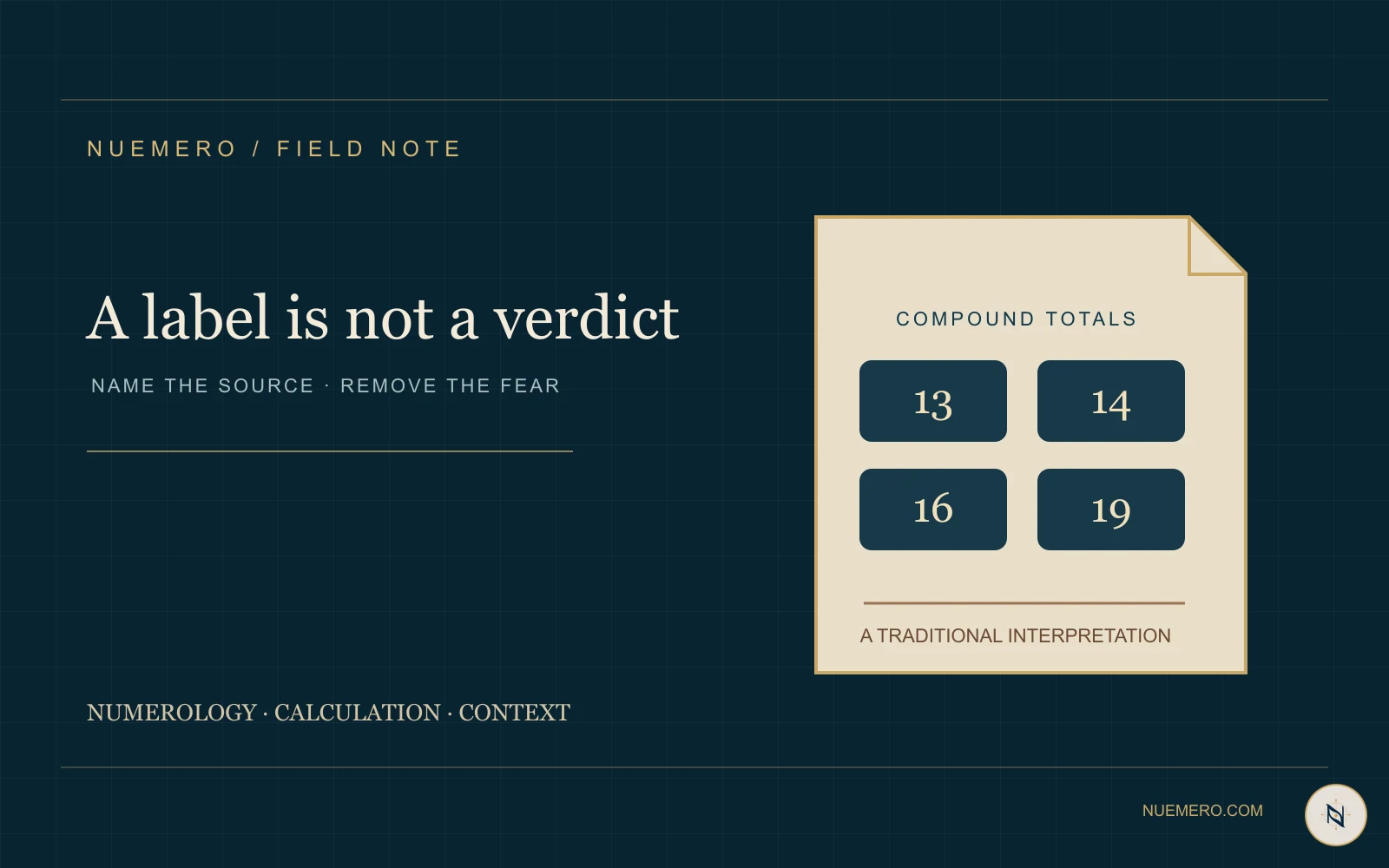
Some modern numerology books label compound totals 13, 14, 16, and 19 as “karmic debt” and attach lessons to them. This is one interpretive tradition, not evidence of past-life debt, moral failing, illness, or misfortune. Check how the number was calculated, which source supplies its meaning, and whether the compound total is retained or reduced.
Key takeaways
The phrase is a school-specific symbolic label, not an established fact about karma.
A compound total appears only if the method produces and retains it.
Authors’ lists and explanations differ; cite the book or convention.
Never use the label to shame, diagnose, threaten, or sell a guaranteed remedy.
On this page
What practitioners mean by the label
Some modern Western numerology writing treats 13, 14, 16, and 19 as significant compound numbers before reduction, then associates them with lessons such as discipline, balance, humility, or independence. The exact lesson varies by author. “Karmic debt” is a spiritual interpretation, not a measurable quantity or a conclusion produced by addition itself.
A root of 4 does not automatically carry a 13 label. The source must retain and interpret compound 13 before reducing it. Two calculators may show the same root but apply different compound-number policies; ask for both steps.
Trace the calculation before interpreting it
Record the exact date or spelling, the letter table for a name number, every addition step, and the master- or compound-number rule. Transliteration can change a name total; calendar format and reduction order can change a date result. Without those details, the label cannot be reproduced.
Keep arithmetic, an author's interpretation, and what you can observe in life in separate columns. This prevents a symbolic reading from being mistaken for a diagnosis or prediction.
Keep meaning from becoming fear or pressure
If a karmic label makes you feel doomed, guilty, or unsafe, set it aside. You do not owe anyone money, a ritual, a new name, or a purchase to “clear” a number. Ask what evidence supports a claim, what a proposed action costs, and whether it would help without the numerology story.
Method and limits
This guide describes the conventions stated above and the way Nuemero’s current calculator works. Numerology interpretations are traditional beliefs, not scientific predictions. Check a source’s method before applying its meanings.
Read Nuemero’s full methodQuick answers
Frequently asked questions
Are 13, 14, 16, and 19 always karmic debt numbers?
No universal rule applies across all numerology traditions. The label appears in some modern schools; identify the author and calculation that produced it.
Does the number prove a past-life debt?
No. It is a spiritual interpretation and does not provide verifiable evidence about a past life or personal guilt.
Should I pay to remove the number?
Be skeptical of guaranteed fixes or fear-based sales. A number is not a proven defect, and no purchase is needed to make the arithmetic valid.
Read further
Sources and method notes
- Cheiro’s Book of Numbers · edition recordCatalog metadata identifies a practitioner edition; compare its exact text and do not treat spiritual claims as independent evidence.
Sources document calculation conventions and claims made within their traditions. They are not evidence that numerology predicts real-world outcomes.
Number meanings & traditions·6 min
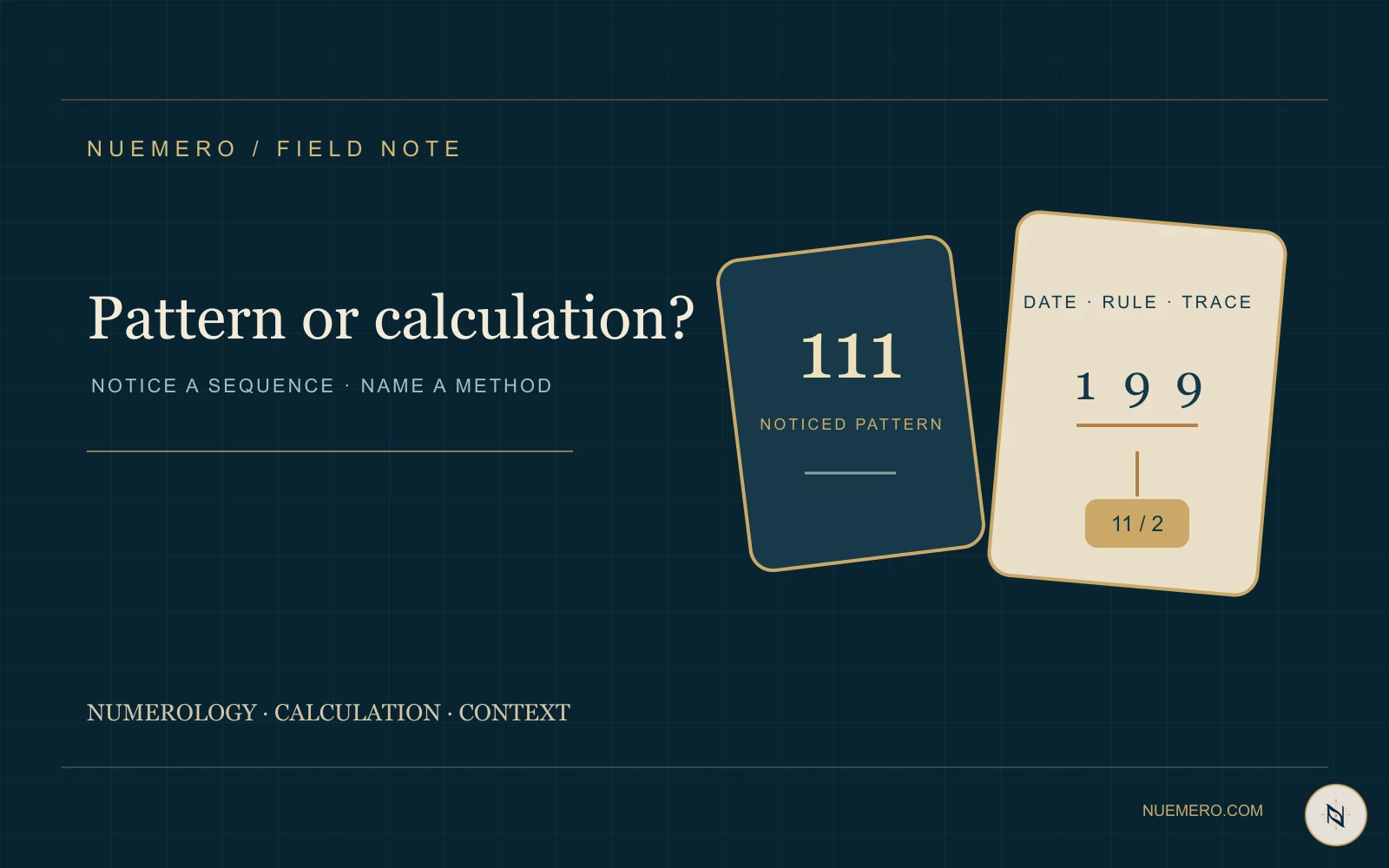
Angel Numbers vs Numerology: Repeating Sequences and Calculated Numbers
Understand how repeating sequences such as 111 or 222 differ from name and birth-date numerology, why interpretations vary, and how to use number patterns without treating them as instructions.
Read the guide
Number meanings & traditions·7 min
Lucky Colours and Numbers: A Cross-System Guide to Optional Symbolism
Compare how numerology sources connect colours and numbers, check where associations differ, and choose clothing or objects by preference rather than promised outcomes.
Read the guide