
Relationships & compatibilityNumerology guide
Numerology for Children and Families: Keep Readings Open-Ended
Explore family-number themes without fixing a child's identity, limiting opportunities, or making decisions about school, health, or relationships from a number.
The short answer
Start here
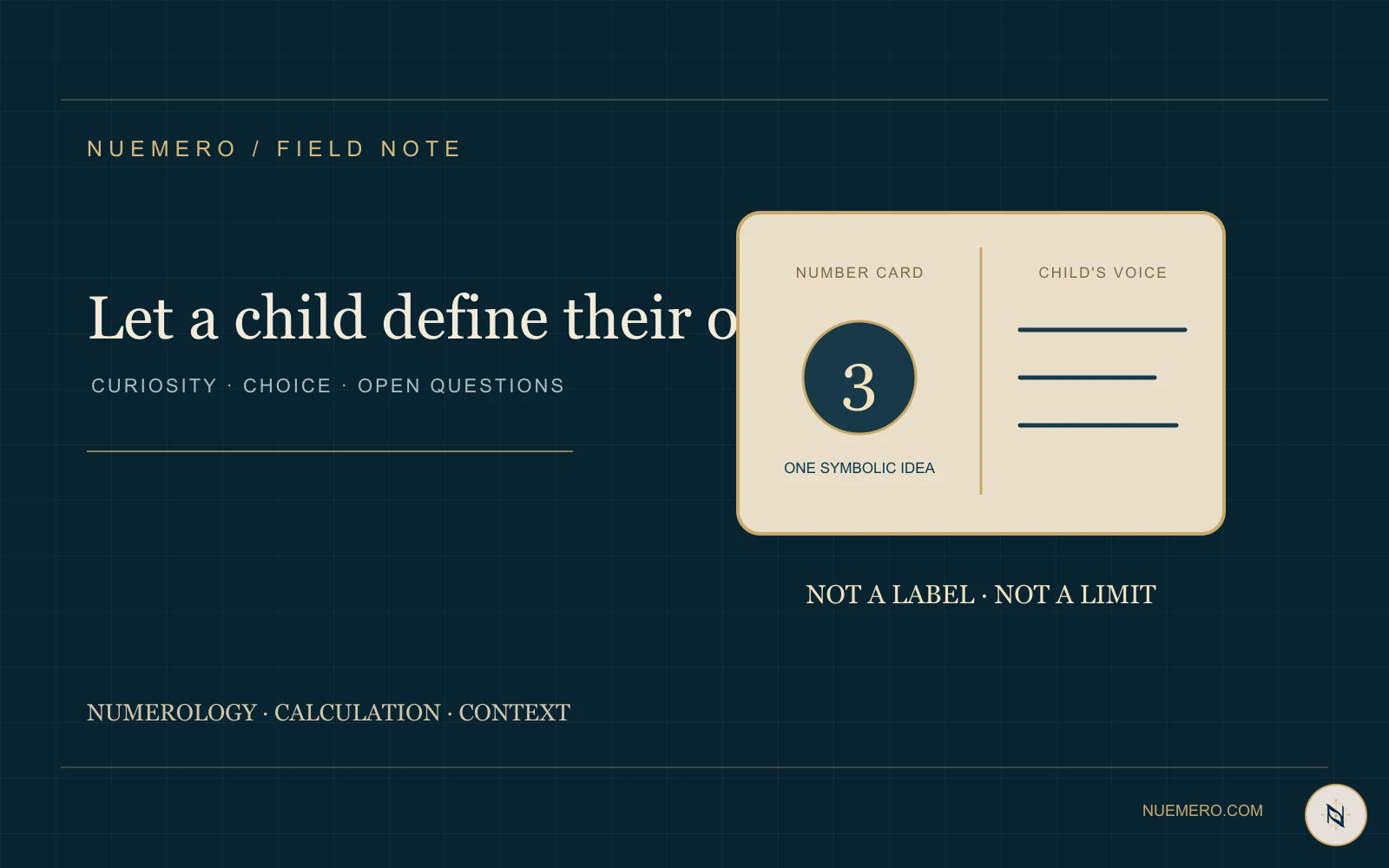
Families may explore numerology as a shared cultural or playful activity, but a child's number must not become a label, diagnosis, or limit on what they can learn or do. A reading cannot establish a child's personality, ability, future, health, or relationship with a parent. Ask open questions, let the child disagree or opt out, and protect their birth data. The American Psychological Association summarizes evidence that adults' inaccurate expectations can shape students' learning opportunities and motivation. Base care, education, and health decisions on the child's actual needs and qualified guidance, never on a symbolic reading.
Key takeaways
A child's number is not a diagnosis, ability test, or forecast.
Let children disagree, skip the activity, and define themselves through experience.
Use real educational, health, and developmental evidence for family decisions.
On this page
Make the activity curious, not predictive
If an adult wants to discuss a traditional number meaning, describe it as one author's symbolic idea. Ask, “Does any part of this feel useful to you?” rather than “You are like this because your number says so.” Children change as they learn, and one reading cannot measure their abilities or interests.
Keep the child's own voice central. If they say the description does not fit, accept that. Do not repeat a label to family members or teachers, use a number to compare siblings, or turn a light activity into a reason to restrict subjects, friendships, or opportunities.
Protect privacy and real choices
Do not post a child's full name and birth date to obtain a reading. Use a fictional example if you want to show arithmetic. Do not use numerology to choose a school, diagnose a difficulty, decide a medical issue, or judge whether a child is “good” at a subject.
The APA's education guidance notes that inaccurate adult expectations can shape students' opportunities, motivation, and outcomes. Keep expectations supportive and evidence-based: notice what the child enjoys, review their work together, and ask a qualified educator or clinician when a real concern needs help.
Method and limits
This guide describes the conventions stated above and the way Nuemero’s current calculator works. Numerology interpretations are traditional beliefs, not scientific predictions. Check a source’s method before applying its meanings.
Read Nuemero’s full methodQuick answers
Frequently asked questions
Can a child's number show their natural talent?
No validated evidence establishes that. Notice the child's interests, practice, progress, and feedback instead.
Should I compare siblings' numerology charts?
Avoid ranking or labeling children from symbolic charts. If the family chooses to explore them, keep each reading optional and individual.
Can numerology help decide a child's school or health care?
No. Use the child's needs, professional advice, school evidence, and family circumstances for those decisions.
Read further
Sources and method notes
- American Psychological Association: Top 20 Principles for Pre-K to 12 EducationPrinciple 11 summarizes how inaccurate adult expectations can affect students' learning opportunities and motivation.
- Nuemero baby-name numerology guideSeparates a chosen name's symbolic number from claims about a child's future.
Sources document calculation conventions and claims made within their traditions. They are not evidence that numerology predicts real-world outcomes.
Relationships & compatibility·7 min
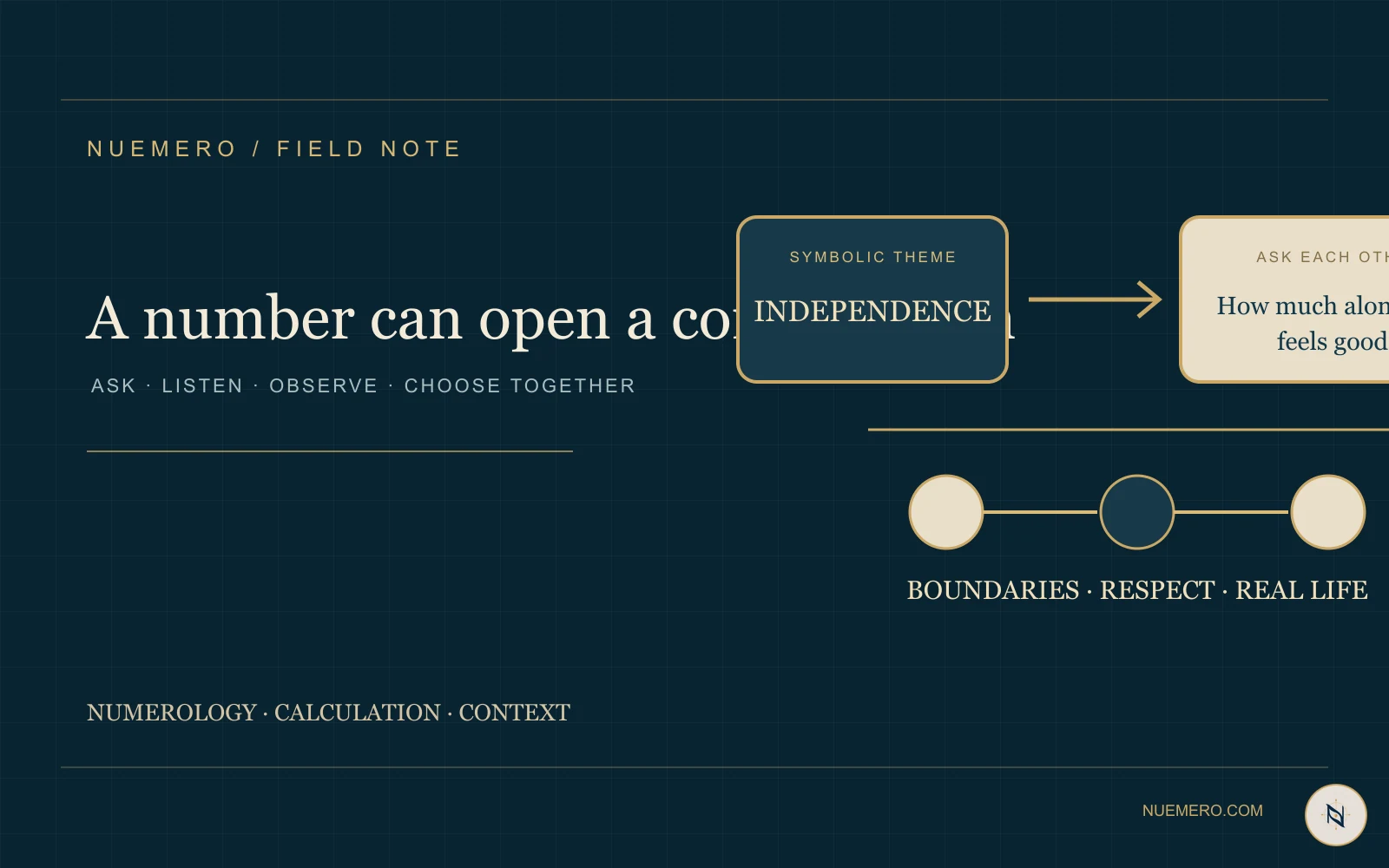
Numerology for Dating: Turn Compatibility Themes Into Better Questions
Use a compatibility reading as a low-pressure conversation prompt, compare inputs consistently, and keep the real evidence of a healthy relationship in view.
Read the guide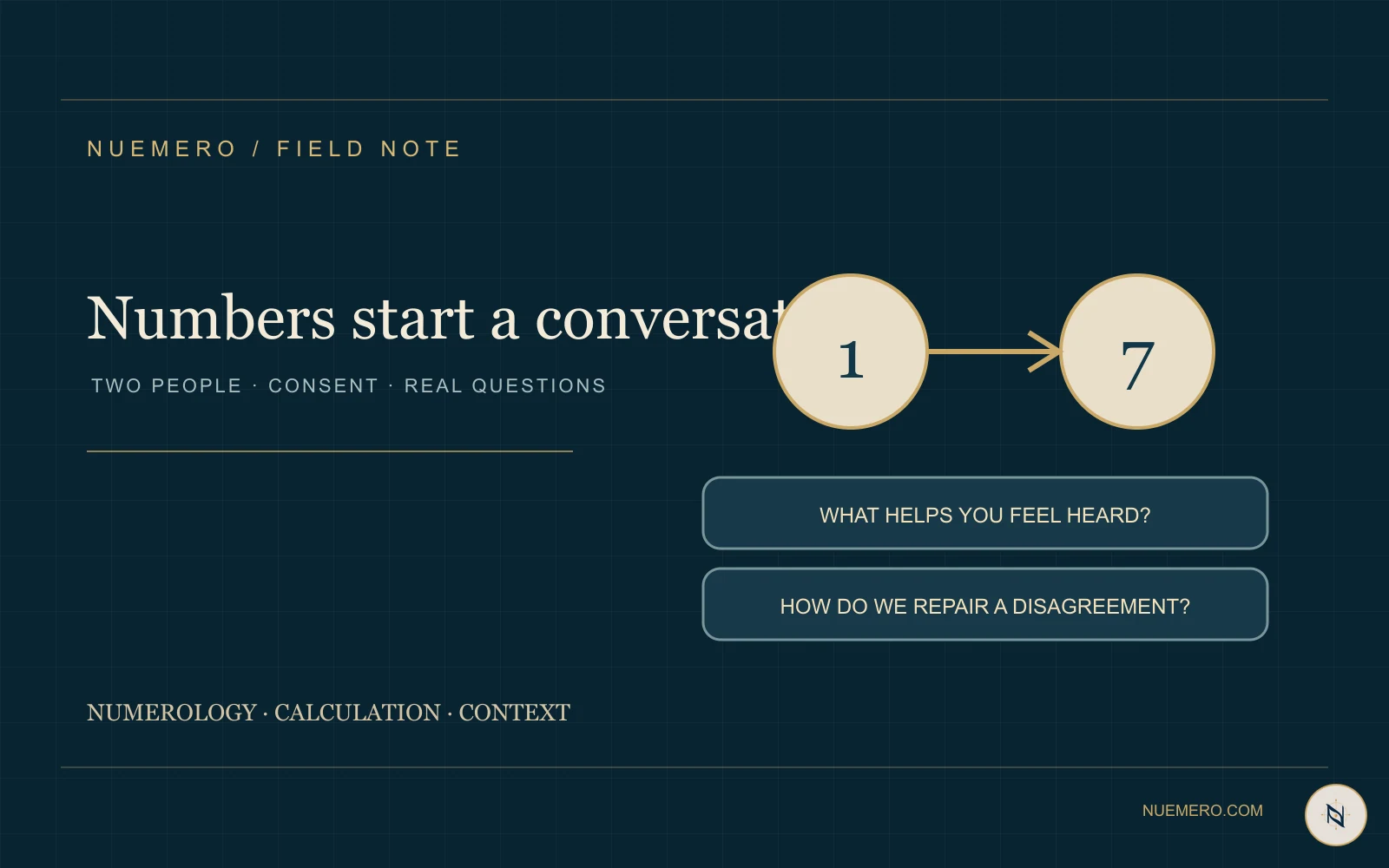
Relationships & compatibility·7 min
Friendship Compatibility in Numerology: Turn a Comparison Into Better Questions
See how a birth-date comparison can be framed as tradition, not a verdict, then use practical prompts about communication, boundaries, and showing up for a friend.
Read the guide