
Core numbers & calculationsNumerology guide
How to Read a Full Numerology Chart Without Mixing Methods
Use a practical checklist to label each chart number by input, formula, tradition, and reduction rule before considering its traditional interpretation.
The short answer
Start here
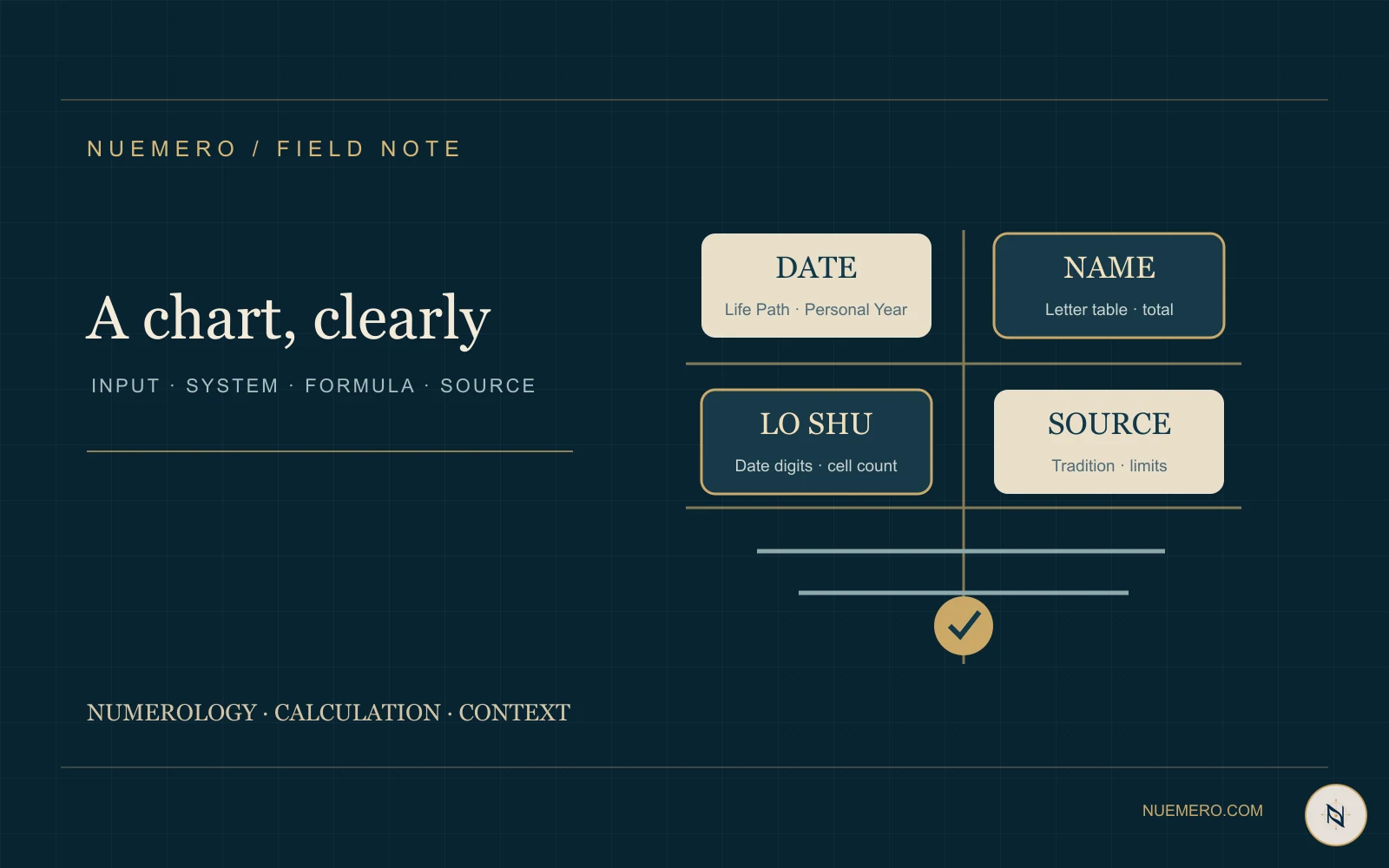
A full chart is easier to audit when each result has a source label: its input, system, formula, reduction, and interpretation. A date-based Life Path, Lo Shu grid, and letter-based name number are different calculations; they should not be blended into one unexplained score. Read the arithmetic first, then treat any meaning as a tradition-specific prompt.
Key takeaways
Label every number with the exact input and numerology tradition.
Keep date arithmetic, Lo Shu counts, and name-letter totals in separate lanes.
Check compound totals and reduction rules before reading meanings.
A chart can support reflection; it does not establish a diagnosis or guaranteed outcome.
On this page
Start with the inputs, not the labels
A chart may contain numbers from a birth date, a written name, or both. Those inputs are processed by different rules. Record the full date and calendar, the exact name spelling and script, and whether the reading uses a birth name, current name, or another form. A changed input can change the arithmetic before interpretation begins.
Do not assume that a number called “destiny,” “expression,” or “life path” has the same formula in every school. Ask what was added or mapped, at what stage a total was reduced, and which source gives the name to the result.
Keep unlike calculations separate
A Lo Shu grid counts selected date digits and places them in fixed cells. A Pythagorean or Chaldean name number maps letters to values and adds them. A Life Path convention reduces a birth date. Their outputs may all be called “numbers,” but they do not share one unit or a common validated scale. Present them side by side with method labels instead of averaging or adding them together.
For each result, show enough arithmetic to reproduce it: letter values and compound total for a name, or raw date digits and reduction sequence for a date. If a chart hides the inputs or jumps straight to a personality paragraph, its calculation cannot be independently checked.
A simple reading order
First verify the inputs. Next check each calculation under its declared system. Then note where the author's interpretation begins and whether other sources disagree. Only after that decide whether a theme feels useful as a question for reflection. This order makes arithmetic errors easier to spot and prevents a symbolic description from sounding like a measured fact.
A practical chart review can end with three notes: one calculation you verified, one interpretation you want to explore, and one real-world source or conversation that can help you test the question. That keeps the reading connected to your choices without handing decisions to a score.
A four-column audit
Make a small table with columns for number, input, system and formula, and interpretation source. For example, a name total should name its spelling and letter table; a Lo Shu row should name the date-digit and zero rule. This turns a dense chart into a set of individual claims that can be checked one by one.
A numerology chart is a symbolic framework, not a validated personality inventory or a substitute for professional advice. Keep health, finances, education, employment, and relationship decisions grounded in relevant evidence and conversations with qualified people.
Method and limits
This guide describes the conventions stated above and the way Nuemero’s current calculator works. Numerology interpretations are traditional beliefs, not scientific predictions. Check a source’s method before applying its meanings.
Read Nuemero’s full methodQuick answers
Frequently asked questions
What should I read first in a numerology chart?
Check the inputs and method labels first, then verify the arithmetic. Read interpretations only after you know which tradition and source they come from.
Can I add Life Path, Lo Shu, and name numbers into one score?
There is no shared validated scale that makes such a combined score meaningful. Keep each calculation and its tradition separate unless a source defines a transparent, limited comparison.
Why do two full-chart readings describe me differently?
They may use different inputs, letter charts, date-reduction rules, interpretive sources, or weighting. Ask each reader to identify those choices and show the calculation.
Can a numerology chart decide my career or relationship?
No chart can establish that decision. It may offer optional reflection language; use skills, circumstances, evidence, and direct conversations for real choices.
Read further
Sources and method notes
- Nuemero calculation methodologyUse the product's declared inputs and formulas to audit its outputs.
- Nuemero core profile calculatorInspect date-based numbers and their visible calculation traces.
Sources document calculation conventions and claims made within their traditions. They are not evidence that numerology predicts real-world outcomes.
Core numbers & calculations·6 min
How to Calculate a Life Path Number (and Why Formulas Differ)
Calculate a Life Path number from a birth date, see every addition in a worked example, and learn how master-number conventions change the display.
Read the guide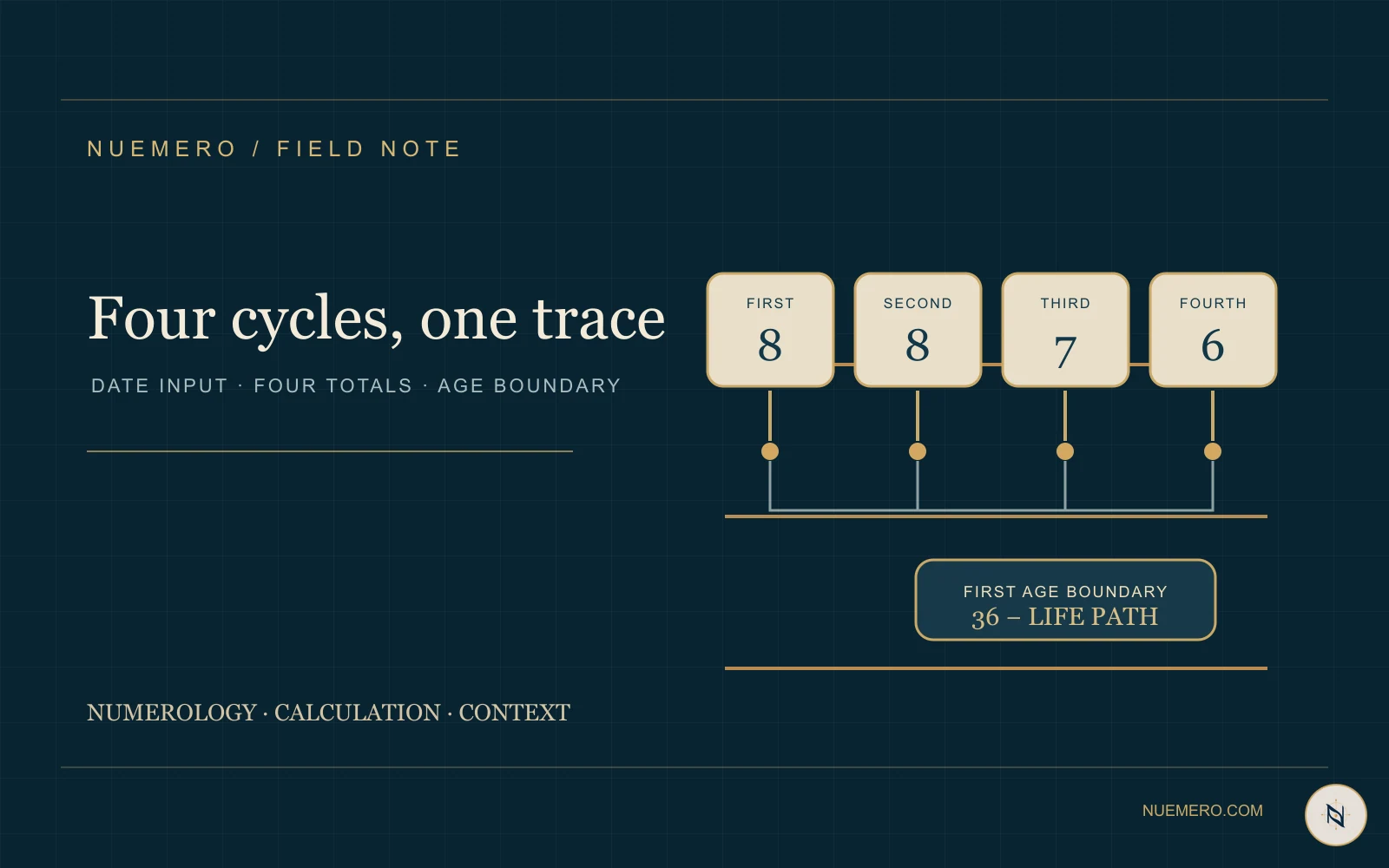
Core numbers & calculations·7 min
Pinnacle Numbers: Calculate the Four Cycles and Their Timing
Follow one published Pinnacle-cycle convention from birth month, day, and year through all four totals and age boundaries; compare the arithmetic without treating cycle themes as guaranteed events.
Read the guide