
Name numerologyNumerology guide
How Indian Names Are Transliterated for Latin-Letter Numerology
Learn why one Devanagari or regional-script name can have multiple Latin spellings, how that changes a letter-based total, and how to document the choice fairly.

The short answer
Start here
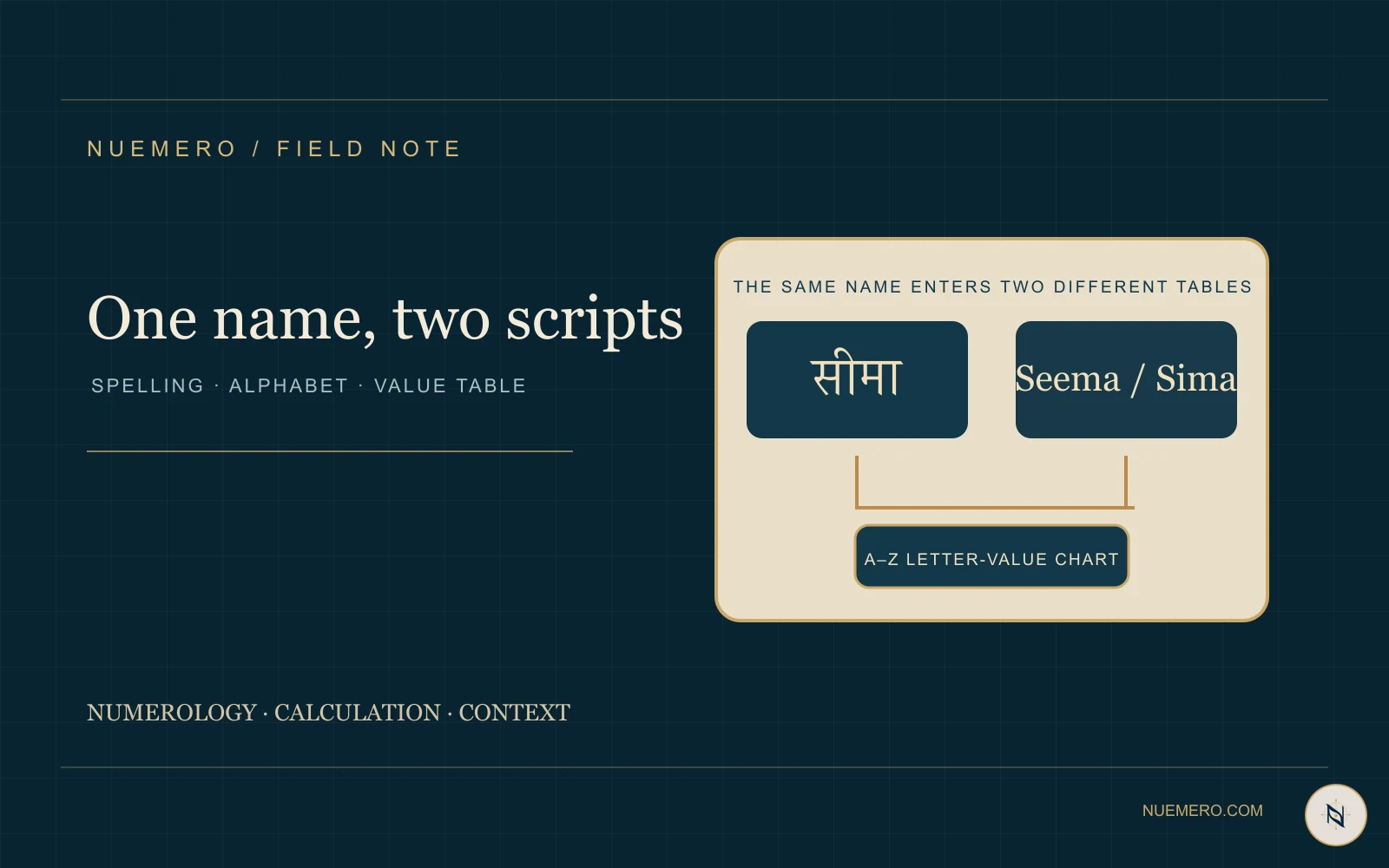
Latin-letter numerology needs a Latin spelling, but many Indian names can be transliterated in more than one defensible way. “Sh” versus “ṣ,” long-vowel marks, doubled consonants, and regional pronunciation can change the letters—and therefore the sum. Preserve the name in its original script, disclose the chosen transliteration, and compare alternatives without calling one person’s spelling incorrect.
Key takeaways
Transliteration is a choice; it is not always a unique one-to-one conversion.
A letter change can change a Latin-based numerology total even when the spoken name is similar.
Keep the original-script name and record each transliteration exactly as written.
A changed total does not prove a person should change their name spelling.
On this page
What transliteration represents
A script transliteration represents writing in another script; it may prioritize pronunciation, convention, or readability. Indian names can include sounds that are represented differently in everyday English spellings. A Latin-letter numerology table then scores the Latin letters, not the original Devanagari characters.
See how one letter changes the sum
Suppose a fictional name is written as “Shreya” by one family member and “Shriya” by another. A Pythagorean table gives E=5 and I=9, so that one letter substitution changes the raw sum by four before any reduction. This is an arithmetic illustration, not a judgment about which spelling is linguistically or personally right.
Document the chosen spelling
For a transparent reading, show the original-script form, the exact transliteration used, the chosen table, and the letter values. If comparing spellings, change only the transliteration and keep the table and reduction rule fixed. Respect the person’s preferred spelling and cultural context.
- Record the original script and the person’s preferred transliteration.
- Show letter-by-letter values for each optional spelling comparison.
- Use the name-comparison calculator and keep the selected alphabet explicit.
Method and limits
This guide describes the conventions stated above and the way Nuemero’s current calculator works. Numerology interpretations are traditional beliefs, not scientific predictions. Check a source’s method before applying its meanings.
Read Nuemero’s full methodQuick answers
Frequently asked questions
Can one Indian name have more than one transliteration?
Yes. Transliteration can reflect different pronunciation, regional, or spelling conventions.
Does spelling change the numerology total?
In letter-based systems, a changed Latin letter can change the sum. Preserve both the original script and exact transliteration.
Which spelling should I use?
For a personal reading, respect the spelling the name-bearer uses. If comparing alternatives, show the rule and do not claim a correction is required.
Is transliteration the same as translation?
No. Transliteration represents a name’s writing in another script; translation replaces meaning with words in another language.
Read further
Sources and method notes
- Nuemero name comparison calculatorInspect how the selected Latin spelling changes letter values.
Sources document calculation conventions and claims made within their traditions. They are not evidence that numerology predicts real-world outcomes.
Name numerology·7 min
Hindi Name Numerology: Devanagari, Roman Spelling, and the Chosen Table
Learn why Latin-letter Pythagorean and Chaldean charts cannot be applied directly to Devanagari, how transliteration changes a name input, and what to document before comparing totals.
Read the guide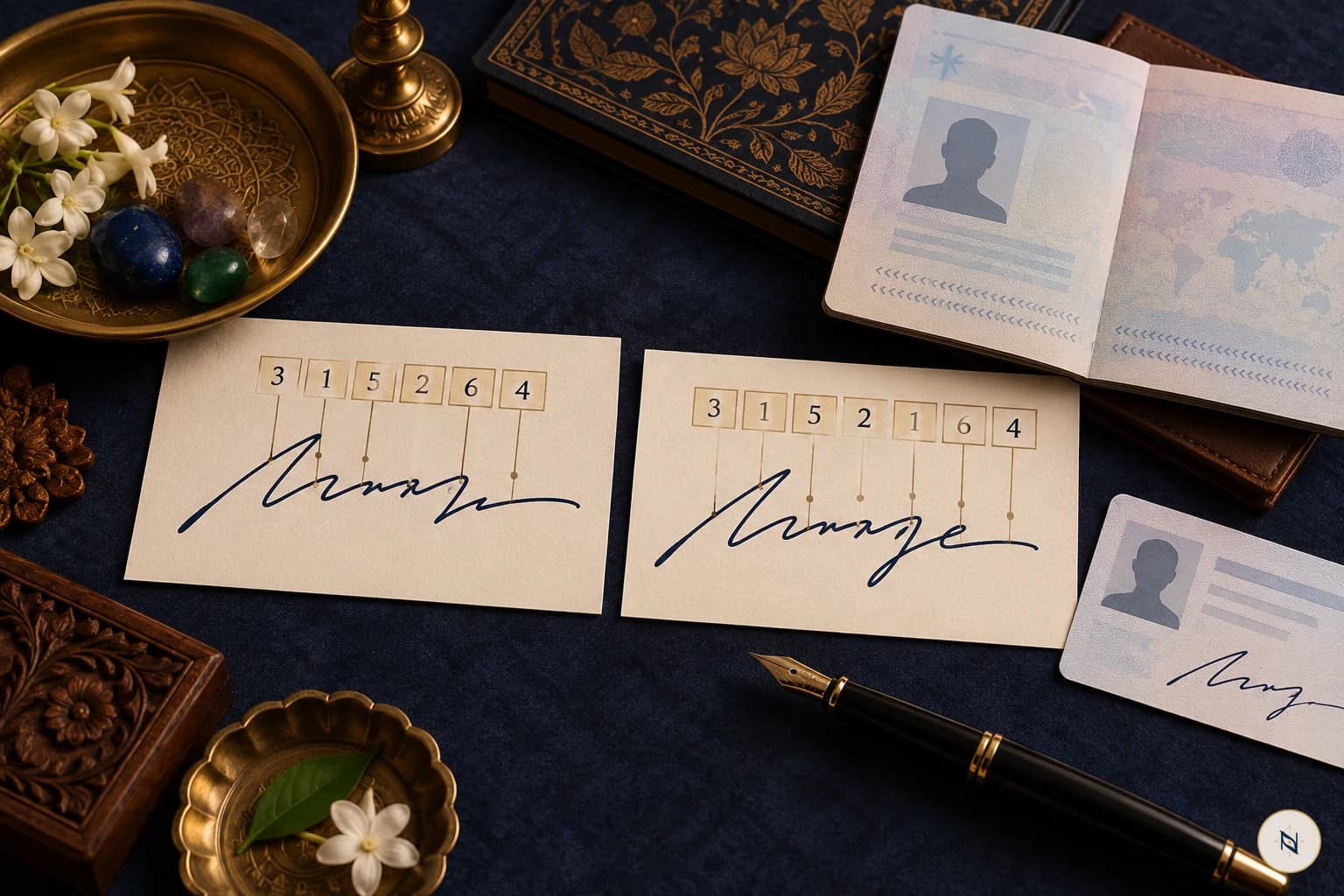
Name numerology·9 min
Should You Change Your Name Spelling for Numerology? A Practical Decision Guide
See how a spelling change alters a name-number calculation, what numerology cannot promise, and which identity, legal, cultural, and everyday checks matter before you decide.
Read the guide