
Name numerologyNumerology guide
Is Y a Vowel or Consonant in Name Numerology? Check the Sound Rule
See how one practitioner convention classifies Y by its spoken role, why that changes vowel and consonant totals, and why a Latin-letter rule should not replace linguistic analysis.
The short answer
Start here
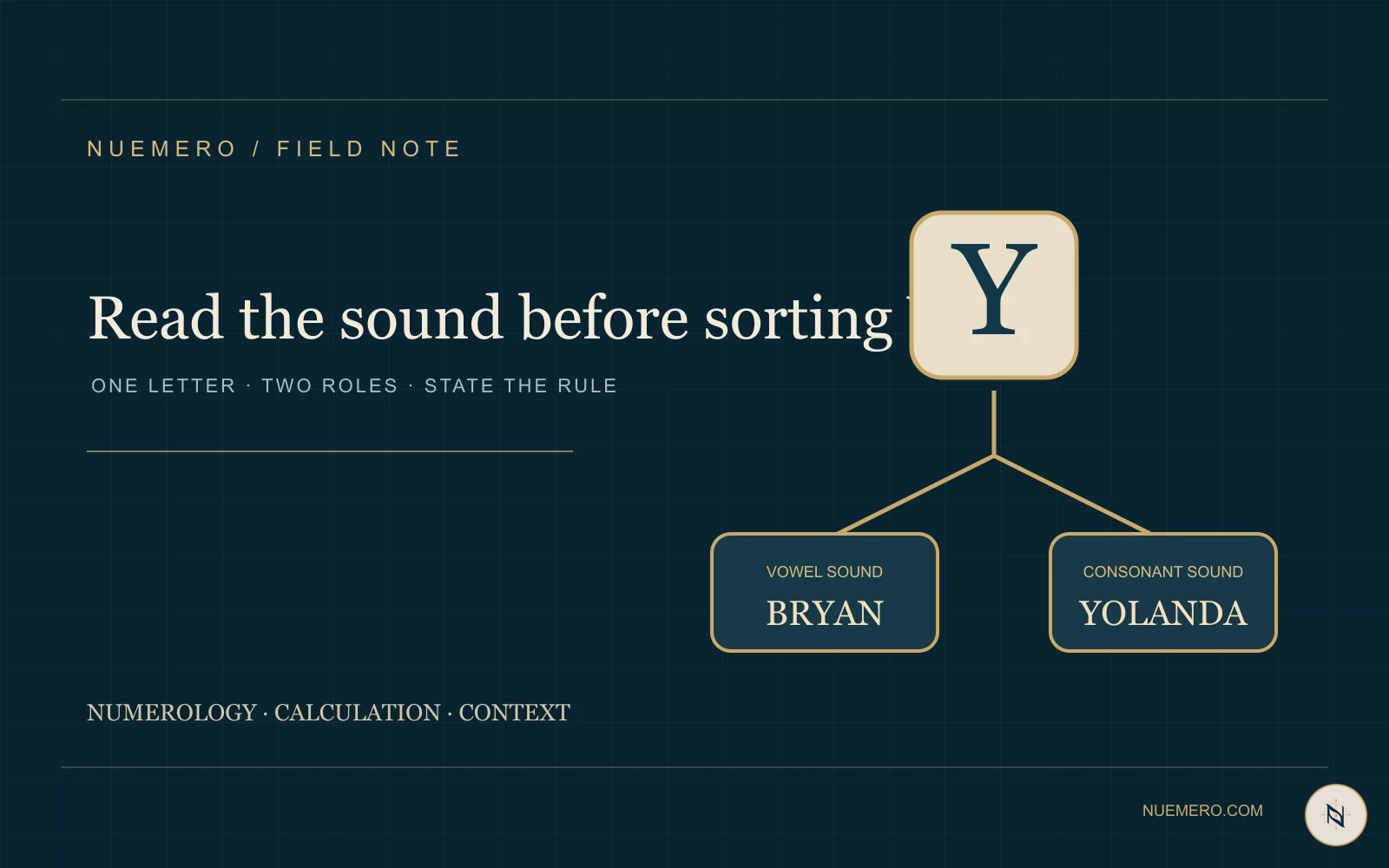
In one Hans Decoz name-number convention, Y can count as a vowel or consonant according to the sound it represents within a name. That choice affects which letters enter Soul Urge and Personality calculations. The source gives examples such as Bryan, where Y supplies the vowel sound in the first syllable, and Yolanda, where Y functions as a consonant. This is a numerology-specific rule, not a universal linguistic classification; another school may simply classify by its own stated convention. Record the exact spelling and source before calculating.
Key takeaways
A stated numerology rule may classify Y by pronunciation and syllable context.
Changing Y's role can move its value between vowel-based and consonant-based name totals.
This chart convention is not a substitute for linguistic or phonetic expertise.
On this page
Why a single letter can change two totals
Some name-number charts separate vowels and consonants to calculate different core numbers. If Y is assigned to one group, its letter value is included there; if assigned to the other, the resulting subtotals change. The total of all name letters may stay the same while the Soul Urge or Personality result differs. Explain the grouping rule rather than silently moving the letter.
Apply one source's sound-based examples
The cited Decoz rule asks what sound Y supplies in the name. In Bryan, it gives the first syllable's vowel sound; in Yolanda, it begins with a consonant-like /y/ sound. The same written letter can therefore be assigned differently in different names under this specific method. Do not assume spelling position alone resolves every case.
Transliterated Indian names add another choice: the Latin spelling itself may represent more than one pronunciation. Write the name in its original script, record the transliteration you chose, and consult a fluent speaker when sound is unclear. The numerology table cannot settle language questions by itself.
Show the choice alongside the calculation
A reproducible name reading shows the exact spelling, letter table, Y classification, and vowel or consonant subtotal. If the result is sensitive to Y, calculate both options as a comparison and say which convention the final result follows. Describe the chart's interpretation as tradition-specific rather than a measured personality fact.
Method and limits
This guide describes the conventions stated above and the way Nuemero’s current calculator works. Numerology interpretations are traditional beliefs, not scientific predictions. Check a source’s method before applying its meanings.
Read Nuemero’s full methodQuick answers
Frequently asked questions
Is Y always a vowel in numerology?
No. In the cited convention its sound and position in a syllable determine the classification; other authors may use different rules.
Does Y change every name number?
It changes a calculation when the method separates vowels and consonants and assigns Y to one group. An all-letter expression total may still include the same Y value either way.
Is the numerology Y rule the same as linguistics?
No. The cited author explicitly presents a numerology convention. For pronunciation or transliteration questions, use linguistic sources or a fluent speaker.
Read further
Sources and method notes
- Hans Decoz: Is Y a Vowel or Consonant?Primary practitioner source for the sound-based Y convention described here; the author distinguishes it from linguistics.
- Nuemero: Expression, Soul Urge, and PersonalityExplains which name letters are used in the broader name-number calculations.
Sources document calculation conventions and claims made within their traditions. They are not evidence that numerology predicts real-world outcomes.

Name numerology·9 min
Should You Change Your Name Spelling for Numerology? A Practical Decision Guide
See how a spelling change alters a name-number calculation, what numerology cannot promise, and which identity, legal, cultural, and everyday checks matter before you decide.
Read the guide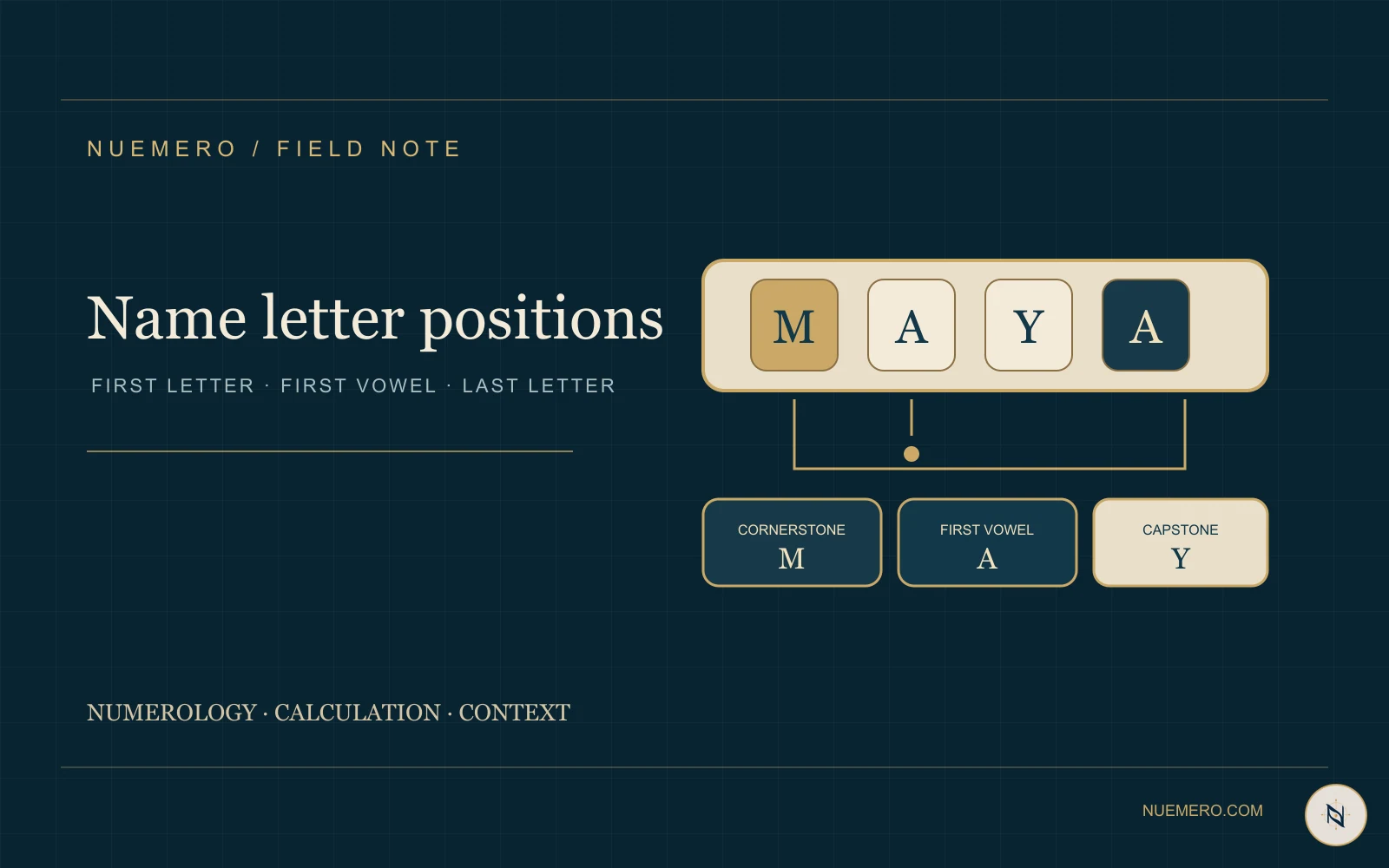
Name numerology·7 min
Cornerstone, Capstone, and First Vowel: Read Name Letters by Position
Identify the first and last letters of the birth first name and its first vowel under one practitioner chart, with a worked example and clear limits on personality claims.
Read the guide