
Lo Shu numerologyNumerology guide
Lo Shu Arrows and Planes: Read the Lines Without Treating Them as a Diagnosis
See how a fixed Lo Shu layout creates rows, columns, and diagonals, why arrow labels vary, and what to verify before using a traditional interpretation.
The short answer
Start here
A Lo Shu line is a geometric pattern in the fixed 4–9–2 / 3–5–7 / 8–1–6 square. Some numerology schools give complete rows, columns, or diagonals traditional labels, but names and interpretations are not universal. Verify the date counts and exact line first; keep a symbolic reading separate from claims about ability or fate.
Key takeaways
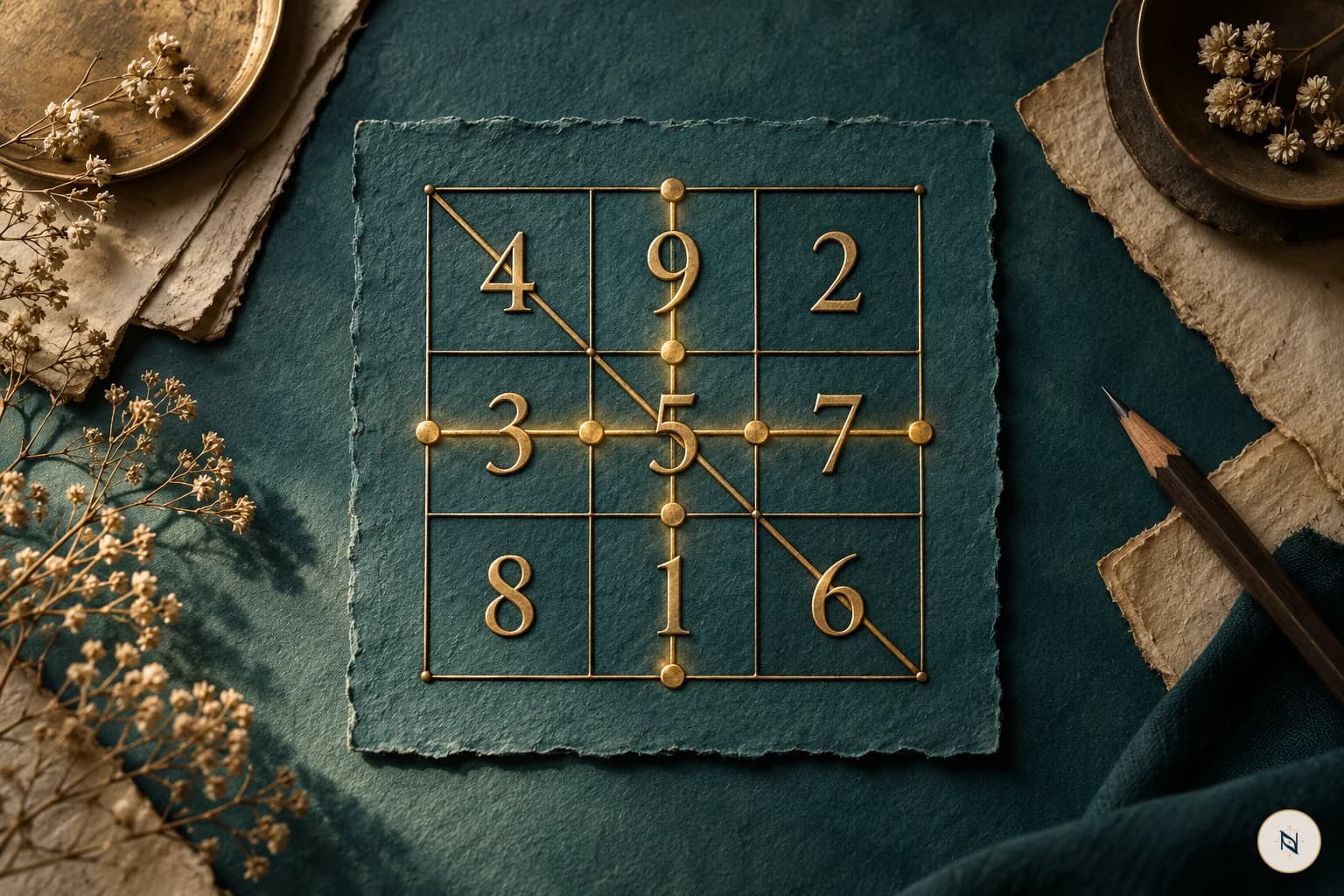
The familiar cell order is 4–9–2 / 3–5–7 / 8–1–6; changing it changes the visual lines.
A complete line requires an entry in every cell under the stated counting rule.
Arrow names vary across authors and are interpretations, not arithmetic results.
A full line proves neither a talent nor an incomplete line a weakness.
On this page
The grid’s visible line
Use the fixed nine-cell arrangement: 4–9–2 across the top, 3–5–7 in the middle, and 8–1–6 at the bottom. Rows run horizontally, columns vertically, and diagonals from corner to corner. These are positions before anyone assigns a symbolic name.
A worked example
A pattern is complete only when each cell on that line contains an eligible date digit under the chosen rule. Zero handling, repeated digits, and date format can change the chart and therefore its lines.
Use the result responsibly
Practitioner sources do not always use the same label for a row, column, or diagonal. Name the author or convention instead of presenting one list as the only authentic reading. The count cannot establish a fixed talent or weakness.
- Use the Lo Shu calculator to make the date tally visible, then compare its rule with the source of any arrow label.
- Describe the pattern, then ask whether the symbolic theme fits your own experience without treating it as proof.
- Nuemero’s fixed order is 4–9–2 / 3–5–7 / 8–1–6, with every eligible repeated digit kept visible.
Method and limits
This guide describes the conventions stated above and the way Nuemero’s current calculator works. Numerology interpretations are traditional beliefs, not scientific predictions. Check a source’s method before applying its meanings.
Read Nuemero’s full methodQuick answers
Frequently asked questions
What are Lo Shu arrows?
Traditional labels some authors use for occupied rows, columns, or diagonals. Names and meanings vary by source.
Does a complete line prove a strength?
No. It is a pattern in a date-based chart; a trait claim is an interpretation, not a conclusion established by the count.
Why do two sources name a line differently?
They follow different interpretive teaching traditions. Compare the exact source and grid convention.
How do I check a line?
Verify the date and count rule, fill the fixed nine-cell grid, then check every position in the row, column, or diagonal.
Read further
Sources and method notes
- Nuemero Lo Shu calculatorInspect the fixed cell order and date-digit counts.
Sources document calculation conventions and claims made within their traditions. They are not evidence that numerology predicts real-world outcomes.
Lo Shu numerology·8 min
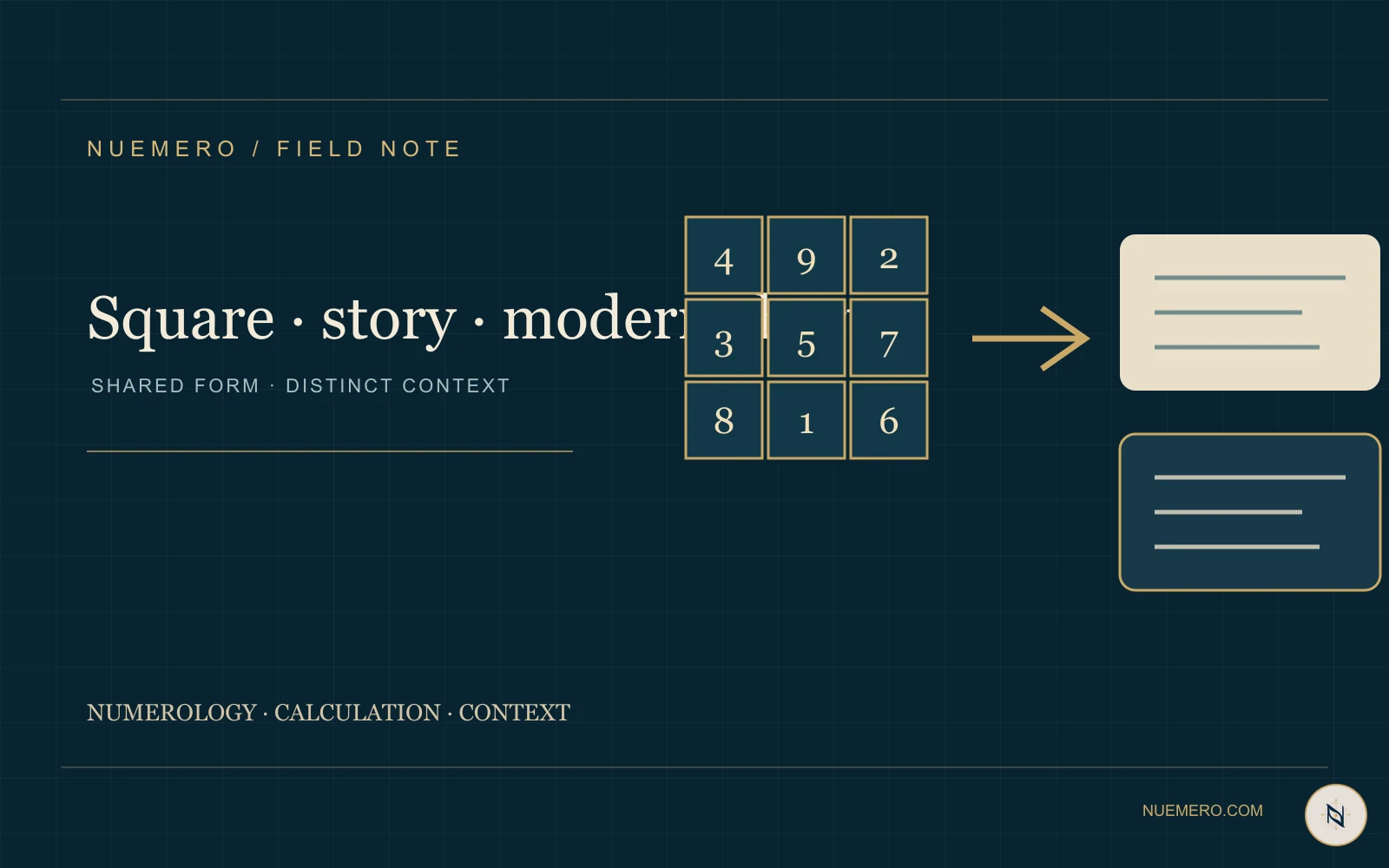
Chinese Numerology and the Lo Shu Grid: Related Ideas, Different Claims
Separate the historical 3×3 magic square from modern birth-date Lo Shu numerology, and avoid treating all Chinese number symbolism as one system.
Read the guide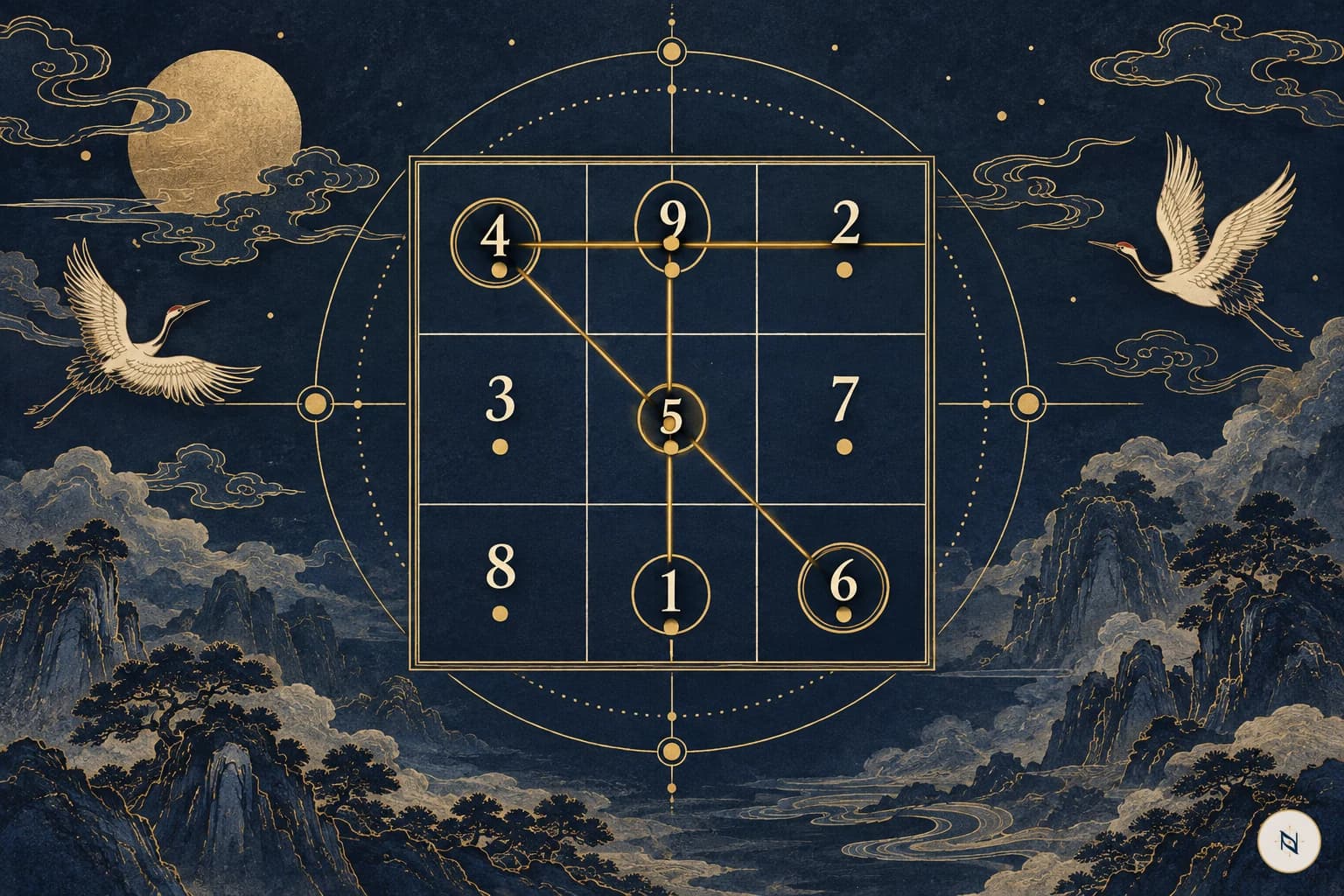
Lo Shu numerology·8 min
Lo Shu Grid Lines: Rows, Columns, and Diagonals Explained
Map the nine-cell arrangement, identify its eight geometric lines, and separate a complete line from the traditional labels attached to it.
Read the guide