
Relationships & compatibilityNumerology guide
Name-Number Compatibility: Compare Two Names Fairly
See how name-number compatibility calculators turn two names into numbers, why scores vary by method, and how to keep a symbolic comparison from becoming a relationship verdict.
The short answer
Start here
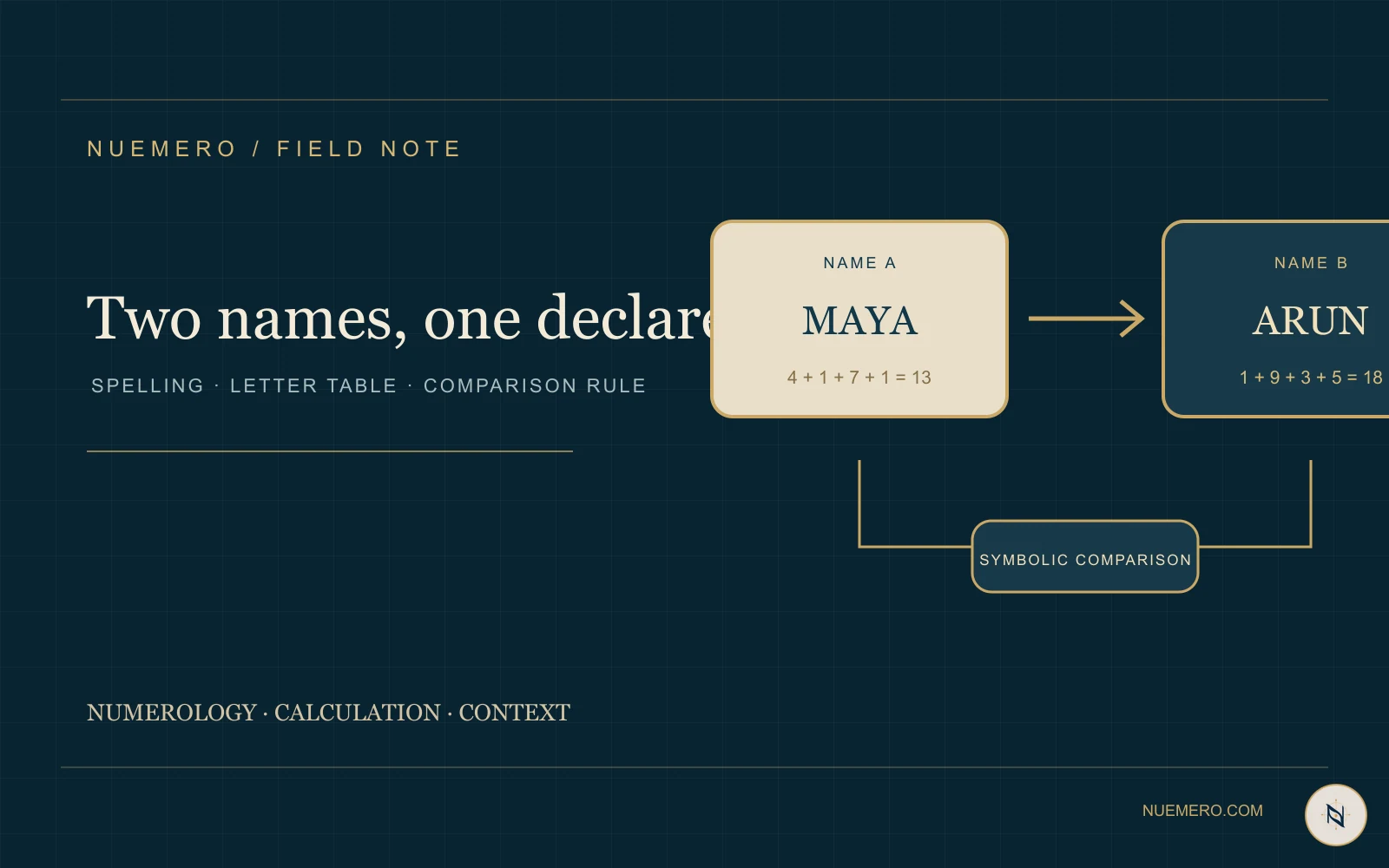
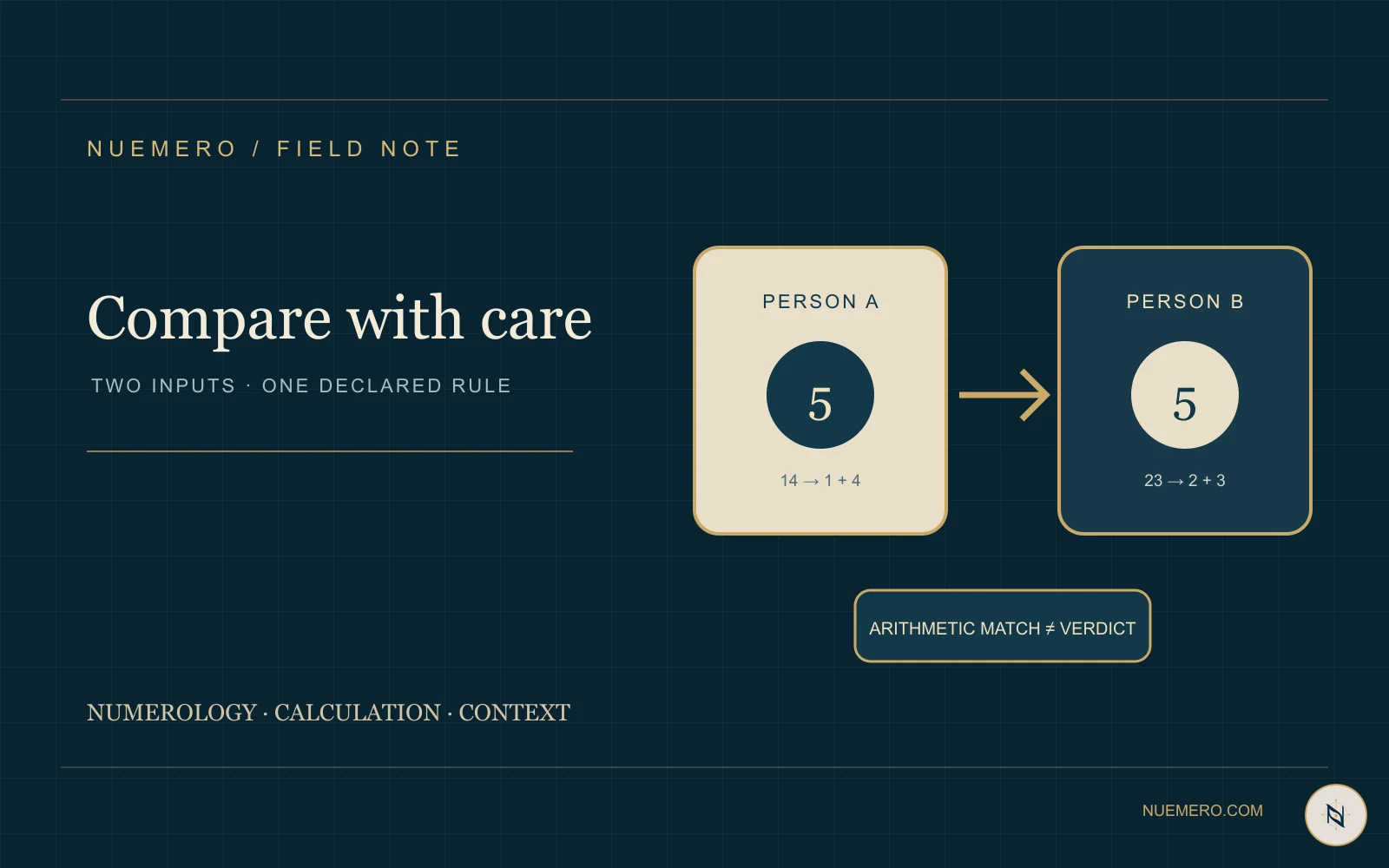
A name compatibility exercise usually assigns values to two chosen name forms, totals each under one letter table, and compares the results using a source-specific relationship chart. The output can change if the spelling, name form, Chaldean or Pythagorean table, reduction rule, or compatibility matrix changes. It is a traditional reflection prompt, not evidence that two people are suited or unsuited. Compare one method at a time and give priority to consent, communication, safety, values, and lived behavior.
Key takeaways
Use the same spelling policy, letter table, and reduction rule for both names.
A compatibility score describes a source's symbolism, not a relationship's future.
Never use a numerology result to pressure, reject, or control a partner.
On this page
How a name comparison is calculated
Choose the exact name forms first: for example, each person's preferred everyday name, or each full birth name if the cited method asks for it. Then select one letter table. Add each name separately, preserve the intermediate total, and follow the same reduction rule for both. The result is not comparable if one side uses a nickname and the other a legal name without explaining the choice.
Finally, identify who created the compatibility chart and how it treats each pair. Online tools sometimes disagree even when both name totals match because their relationship matrices differ. Keep the raw calculation separate from the interpretation so the source's rule remains visible.
Use it as a conversation prompt, not a verdict
If a reading describes a pair as harmonious or challenging, turn that into a neutral question: What helps us repair a misunderstanding? Which expectations should we discuss? Ask both people, rather than assigning a trait to someone from their name. A score cannot establish consent, trust, compatibility, or abuse.
For real relationship choices, look at actions over time, respect for boundaries, shared values, practical expectations, and whether both people feel safe. If someone uses a number to threaten or pressure you, step away from the reading and seek support from a trusted person.
Method and limits
This guide describes the conventions stated above and the way Nuemero’s current calculator works. Numerology interpretations are traditional beliefs, not scientific predictions. Check a source’s method before applying its meanings.
Read Nuemero’s full methodQuick answers
Frequently asked questions
Which names should I compare?
Follow the named method and state the choice. For a casual reflection, both preferred everyday names are a consistent option; do not imply that one name is the only authentic identity.
Why do two name compatibility calculators disagree?
They may use different name inputs, letter tables, reduction rules, or compatibility matrices. Compare every step before comparing the interpretation.
Can a low score mean we should separate?
No. A score is not validated relationship evidence. Decisions should come from the people involved, their safety, values, communication, and actual circumstances.
Read further
Sources and method notes
- Hans Decoz: Expression Number and name inputsPractitioner source for one name-number calculation convention; its method should not be mistaken for a universal compatibility standard.
- Numerology Tools: Name compatibility calculatorIllustrates how online name-compatibility matrices can vary and why the scoring rule must be disclosed.
Sources document calculation conventions and claims made within their traditions. They are not evidence that numerology predicts real-world outcomes.
Relationships & compatibility·7 min
Mulank Compatibility: What Two Birth Numbers Actually Compare
Learn how a Mulank comparison starts with two birth days, why traditions disagree about pairing rules, and how to keep a number reading from becoming a relationship verdict.
Read the guide
Relationships & compatibility·8 min
How to Compare Numerology Compatibility Without Reducing Love to a Score
See what compatibility charts compare, how to check their methods, and how to use number themes as conversation prompts while keeping respect, safety, and real behavior central.
Read the guide