
Systems, methods & foundationsNumerology guide
Numerology and Astrology: What Each System Uses as Its Input
Compare the usual inputs, calculations, and questions in numerology and astrology without treating the systems as interchangeable or scientifically predictive.
The short answer
Start here
Numerology commonly works with dates and/or letters converted through a named number table. Astrology commonly interprets calculated positions or cycles of celestial bodies, with the needed birth details depending on its school and chart. Both contain many traditions, so these are broad distinctions, not universal rules. Keep the method visible, do not transfer an astrology claim into a numerology reading, and remember that symbolic interpretations are not validated forecasts of a person's future.
Key takeaways
Numerology often maps letters or date digits to numbers; astrology calculates celestial positions or cycles.
Required birth details depend on the specific tradition and chart.
Keep each system's calculation and interpretation separately labeled.
Neither symbolic approach should replace evidence-based decisions.
On this page
Compare the starting inputs
Start with inputs. A common numerology exercise reduces a birth date or totals letters under a Pythagorean, Chaldean, or other stated mapping. A common astrological natal chart uses a birth date, time, and place to calculate positions within a selected zodiac and house system. Conventions vary, so ask which chart or letter table is being used before comparing outputs.
Keep calculations and claims distinct
The methods answer different kinds of symbolic questions. A number profile may describe a traditional number association; an astrology chart may discuss planets, signs, houses, and aspects. A shared word such as “cycle” does not make their calculations equivalent. Label the tradition, inputs, and operation for every result, and do not use one system to silently fill gaps in another.
Use real-world evidence for decisions
Use either practice as optional reflection if it is meaningful to you, while grounding decisions in the relevant facts: skills and work conditions for a career, consent and behavior for relationships, and qualified care for health questions. A reading should widen reflection, not claim authority over another person's choices or future.
- Ask a reader which school, chart, and inputs they used.
- Compare calculations only after matching their stated rules.
- Use the methodology page to inspect Nuemero's declared inputs.
Method and limits
This guide describes the conventions stated above and the way Nuemero’s current calculator works. Numerology interpretations are traditional beliefs, not scientific predictions. Check a source’s method before applying its meanings.
Read Nuemero’s full methodQuick answers
Frequently asked questions
Does numerology need my birth time and place?
Many common numerology calculations use a name or date rather than an exact birth time and place, but practices vary. Ask for the specific method and inputs.
Are astrology and numerology scientifically proven forecasts?
Their symbolic interpretations are not established predictive science. Treat readings as traditions or reflection and use relevant evidence for decisions.
Read further
Sources and method notes
- Nuemero methodologyUse the declared numerology inputs and formulas here; chart requirements differ by astrological school.
Sources document calculation conventions and claims made within their traditions. They are not evidence that numerology predicts real-world outcomes.
Systems, methods & foundations·7 min
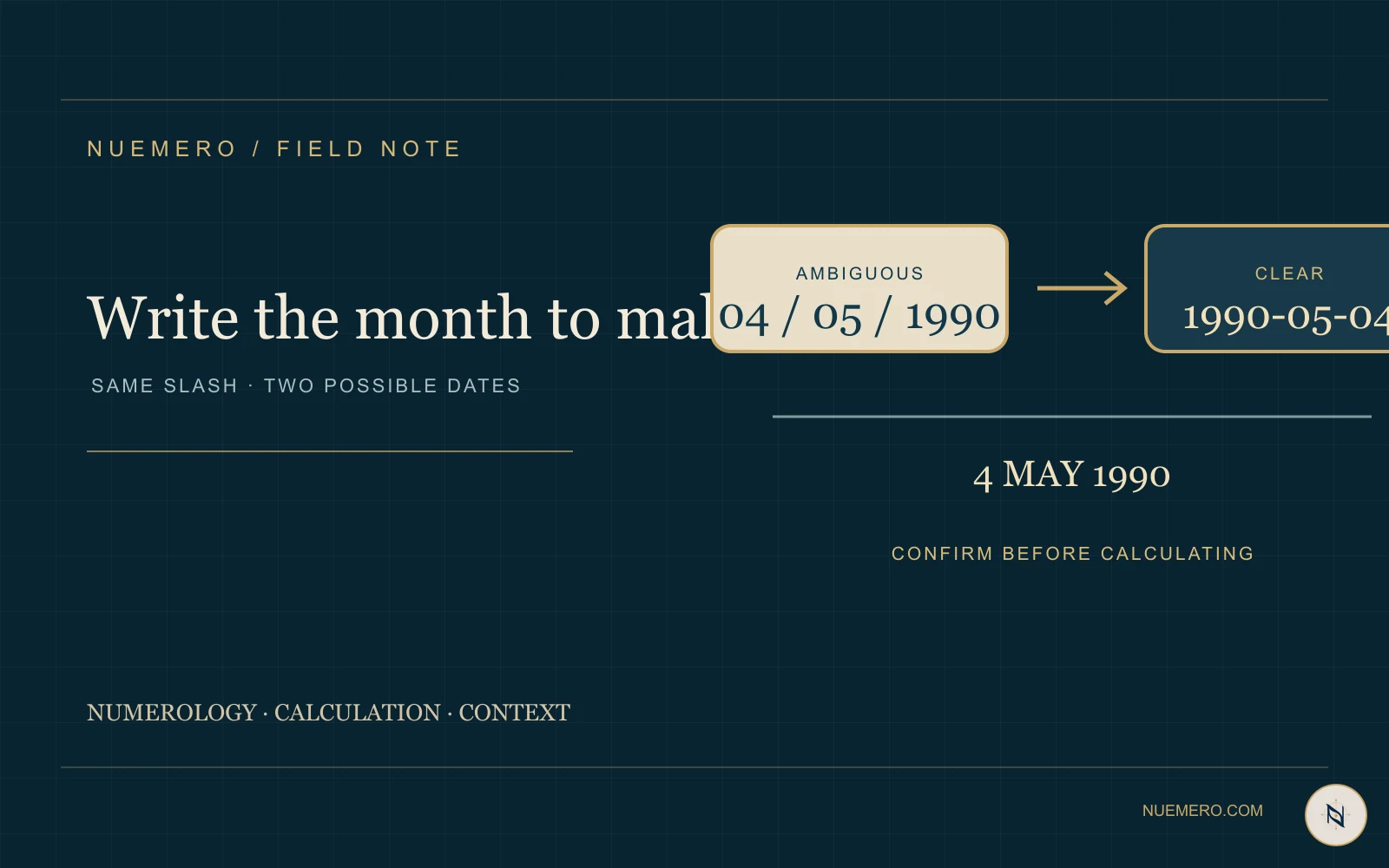
Birth-Date Format in Numerology: Prevent Day–Month Mix-Ups
See how an ambiguous numeric date can change a calculation, learn a clear date-entry format, and record the original calendar date before reducing digits.
Read the guide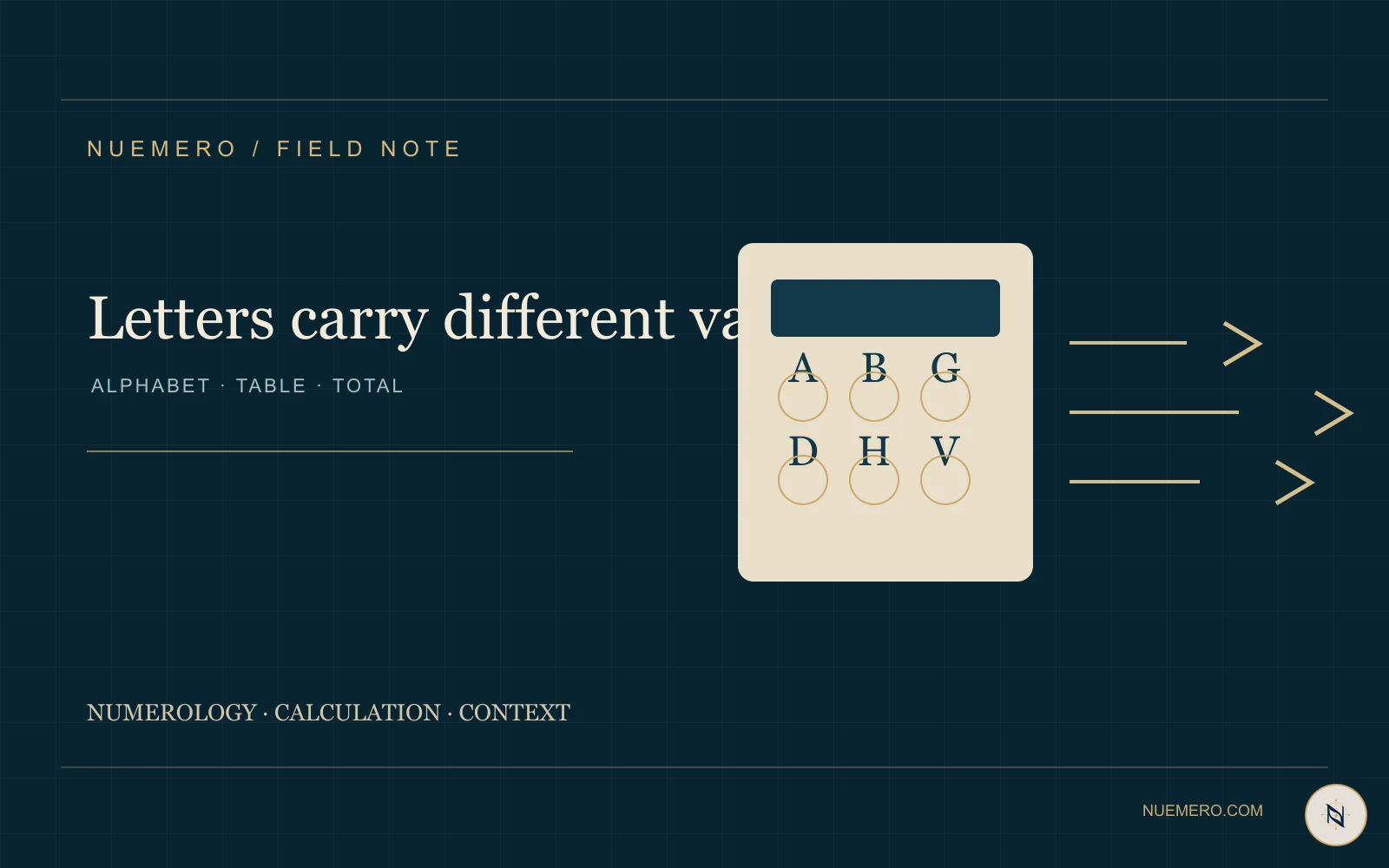
Systems, methods & foundations·7 min
Numerology and Gematria: Related Ideas, Distinct Traditions
Understand how Hebrew letter values are used in Jewish textual interpretation, why gematria is not simply a universal name-number system, and how to discuss it with cultural context.
Read the guide