
Systems, methods & foundationsNumerology guide
Birth-Date Format in Numerology: Prevent Day–Month Mix-Ups
See how an ambiguous numeric date can change a calculation, learn a clear date-entry format, and record the original calendar date before reducing digits.
The short answer
Start here
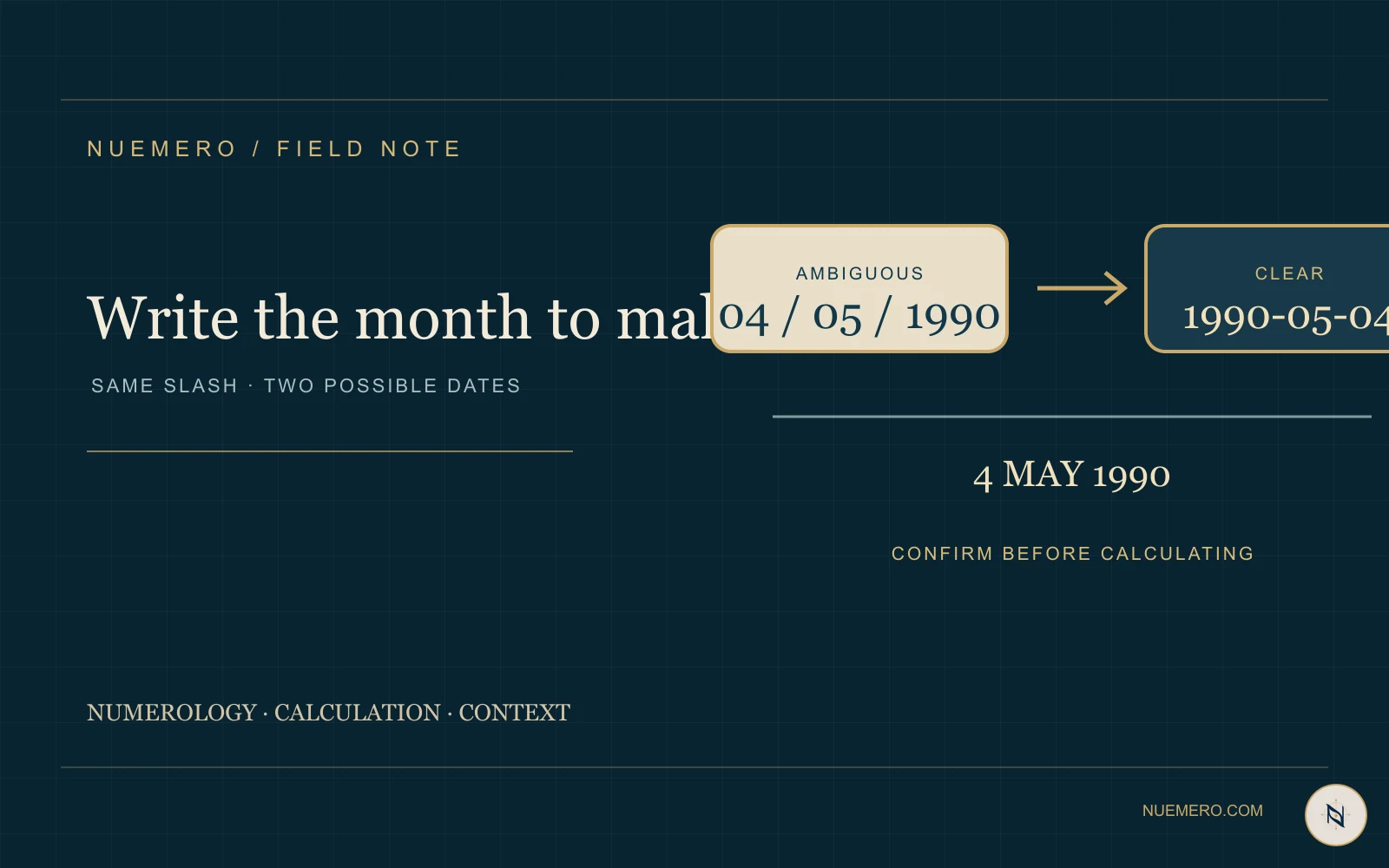
A date like 04/05/1990 may mean 4 May or April 5, depending on the locale and interface. A numerology result built from the wrong interpretation can be arithmetically correct but use the wrong input. Prefer a month written as a word or an unambiguous year-month-day record such as 1990-05-04, confirm the calendar, and check the date displayed back by the calculator before reading the number. Never infer a birth date from a screenshot or numeric format alone.
Key takeaways
A correct calculation on a misread date still gives the wrong result for the intended person.
Write the month name or use a clearly labeled year-month-day format.
Confirm the calculator's displayed date and chosen calendar before interpreting a number.
On this page
Why 04/05/1990 needs clarification
A slash-separated date is not self-explanatory. In one locale, 04/05/1990 is 4 May; in another it is April 5. Those dates have different day and month inputs, which changes calculations that use either component. The displayed root may sometimes happen to match, but that coincidence does not confirm the birth date was parsed correctly.
This is an input-quality issue, not evidence that a numerology system is wrong. First agree on the date, then compare formulas.
Enter dates so another person can reproduce them
Use a written month—4 May 1990—or a declared ISO-style year-month-day form—1990-05-04. Confirm whether the tool expects the Gregorian calendar or another calendar, and ensure the day and month were not reversed during migration from a profile or spreadsheet. For private readings, avoid sharing more personal data than the calculator needs.
Check the parsed date before reading the result
Read the date back from the confirmation screen. Compare it to the birth record and intended calendar. Then keep a short trace: original date, display format, calendar, method, and reduction steps. If two calculators disagree, confirm the same date was parsed before investigating their numerology conventions.
Method and limits
This guide describes the conventions stated above and the way Nuemero’s current calculator works. Numerology interpretations are traditional beliefs, not scientific predictions. Check a source’s method before applying its meanings.
Read Nuemero’s full methodQuick answers
Frequently asked questions
Can date format change my Life Path or Personal Year result?
Yes, if the day and month are reversed, the input changes. Recheck the date shown by the calculator before comparing formulas.
What date format should I use?
Write the month name or use an unambiguous, labeled year-month-day form, and confirm the tool's calendar convention.
If two date formats reduce to the same root, does the ambiguity matter?
Yes. The day, month, master-number handling, or another cycle can differ even when one final root happens to match. Confirm the actual date rather than relying on a coincidence.
Read further
Sources and method notes
- ISO: Date and time formatBackground on unambiguous year-month-day date notation; follow each calculator's stated expectations.
- Nuemero methodologyReview the product's declared date inputs and reduction conventions.
Sources document calculation conventions and claims made within their traditions. They are not evidence that numerology predicts real-world outcomes.
Core numbers & calculations·6 min
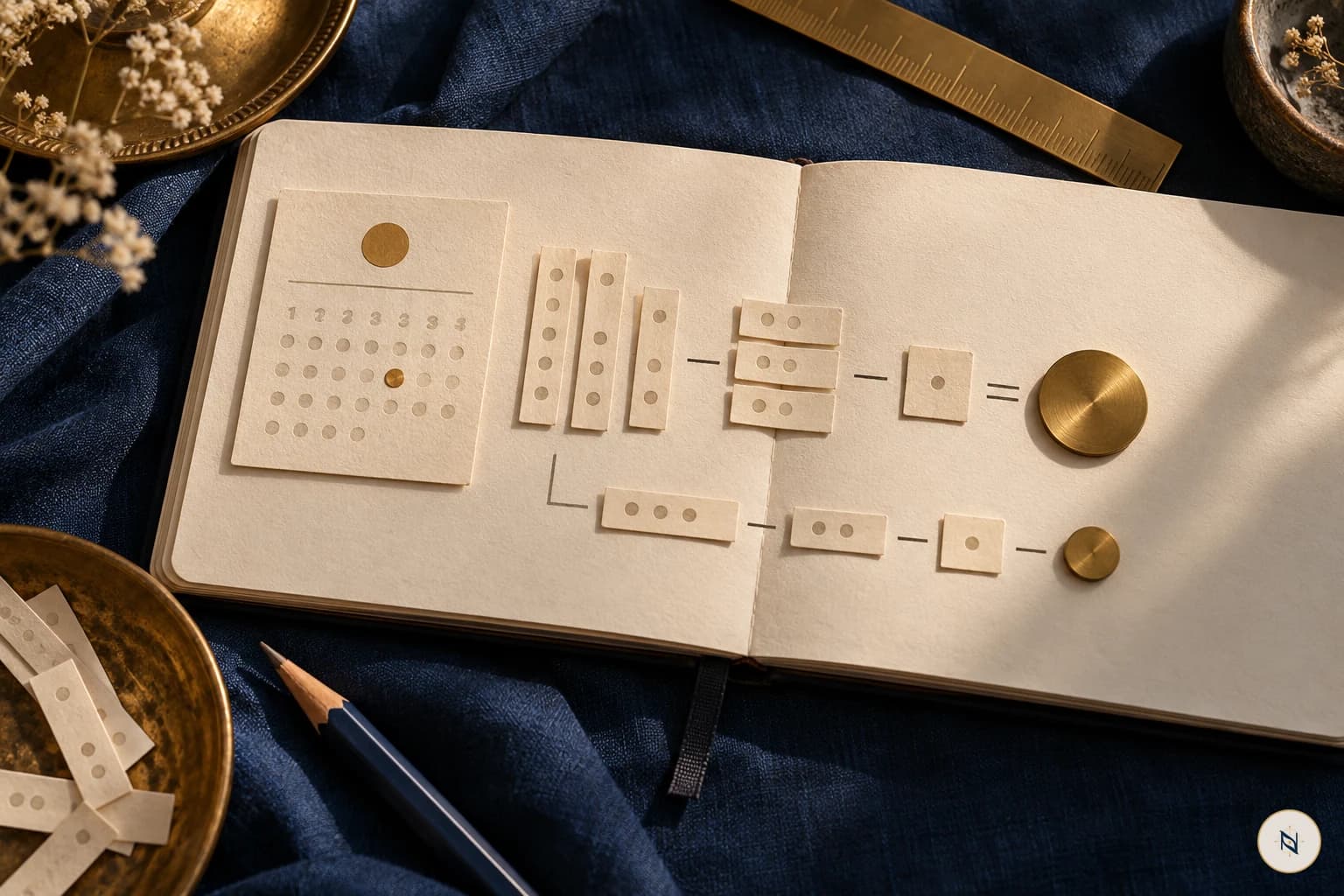
How to Calculate a Life Path Number (and Why Formulas Differ)
Calculate a Life Path number from a birth date, see every addition in a worked example, and learn how master-number conventions change the display.
Read the guide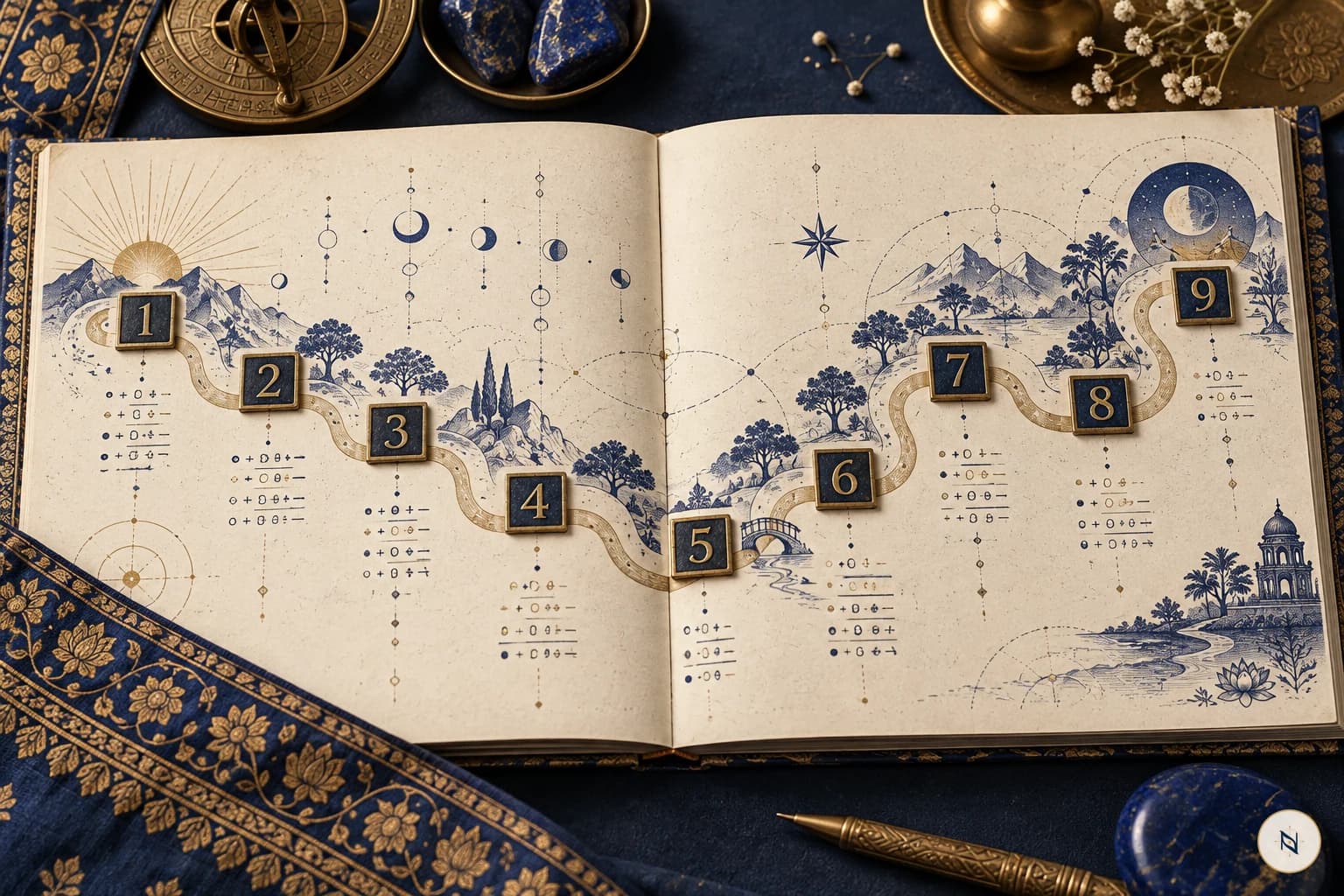
Core numbers & calculations·7 min
Life Path Numbers 1 to 9: Themes, Calculation, and Reflection
Explore traditional Life Path themes for 1–9, check how the full birth-date calculation works, and keep symbolic descriptions separate from claims about your future.
Read the guide