
Core numbers & calculationsNumerology guide
Life Path Numbers 1 to 9: Themes, Calculation, and Reflection
Explore traditional Life Path themes for 1–9, check how the full birth-date calculation works, and keep symbolic descriptions separate from claims about your future.

The short answer
Start here
A Life Path number is commonly derived from the full birth date, but reduction order and master-number rules vary. The one-digit result is interpreted through numerology traditions; it is not a scientifically established forecast or fixed personality profile. Check the arithmetic with the chosen rule and use the traditional theme as optional reflection.
Key takeaways
Life Path usually uses day, month, and year; Mulank commonly uses the day alone.
Reduction methods differ, so preserve the intermediate sums and master-number rule.
Traditional meanings differ by author and do not establish an individual's future.
Use reflection alongside skills, choices, circumstances, and professional advice where needed.
On this page
First identify the calculation method
There are multiple ways to reduce a full date: add every digit and reduce, reduce day/month/year separately then combine, or preserve selected master numbers. Because these steps can produce different intermediate values, a useful reading names the method, shows the input, and keeps the unreduced total visible. Do not infer that one calculator is wrong until you compare its stated convention.
Themes for Life Path 1–9
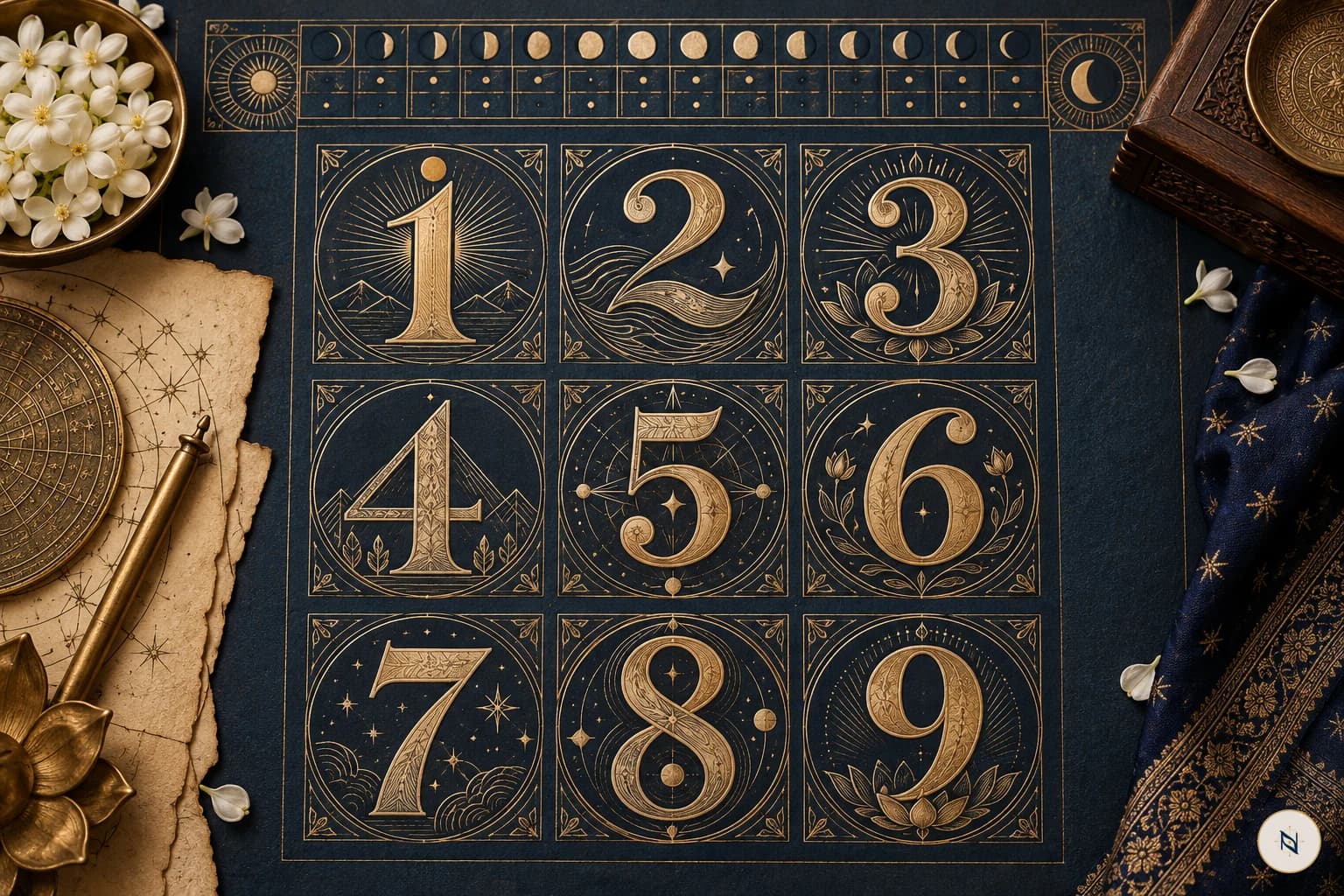
Traditional number descriptions often call 1 independent, 2 cooperative, 3 expressive, 4 steady, 5 adaptable, 6 caring, 7 reflective, 8 managerial, and 9 humanitarian. This is a compact map of common modern themes, not a universal dictionary: writers may assign different strengths, friction points, or lessons. Treat a description as a lens you may test, not a verdict you must fit.
Use a reading as reflection
Choose one phrase and check it against specific situations: when have you shown it, when not, and what else explains the outcome? That turns a reading into a useful journal prompt. A Life Path number should not decide education, work, a relationship, money, or health choices; real evidence and qualified advice belong in those decisions.
- Calculate with a displayed rule and retain the intermediate sums.
- Read at least one source that explains its reduction convention.
- Write a practical reflection prompt and answer it with real examples.
Method and limits
This guide describes the conventions stated above and the way Nuemero’s current calculator works. Numerology interpretations are traditional beliefs, not scientific predictions. Check a source’s method before applying its meanings.
Read Nuemero’s full methodQuick answers
Frequently asked questions
How do I calculate my Life Path number?
Use a named full-date method, show the intermediate sums, and state how the source handles master numbers. Reduction order varies.
Are Life Path meanings universal?
No. Numerology authors and traditions may assign different themes to the same number.
Can a Life Path number predict my future?
It is not a scientifically established forecasting method. Treat a reading as optional reflection, not certainty.
What is the difference between Life Path and Mulank?
Mulank commonly uses the birth day; Life Path commonly uses the whole birth date. Compare the stated formulas.
Read further
Sources and method notes
- Nuemero complete profile calculatorInspect the selected full-date formula and visible arithmetic.
Sources document calculation conventions and claims made within their traditions. They are not evidence that numerology predicts real-world outcomes.
Core numbers & calculations·9 min
Mulank 1 to 9: Traditional Themes, Strengths, and Questions
A balanced guide to Mulank 1–9: how the birth-day number is calculated, what traditions associate with each number, and how to use the themes without treating them as fixed personality facts.
Read the guide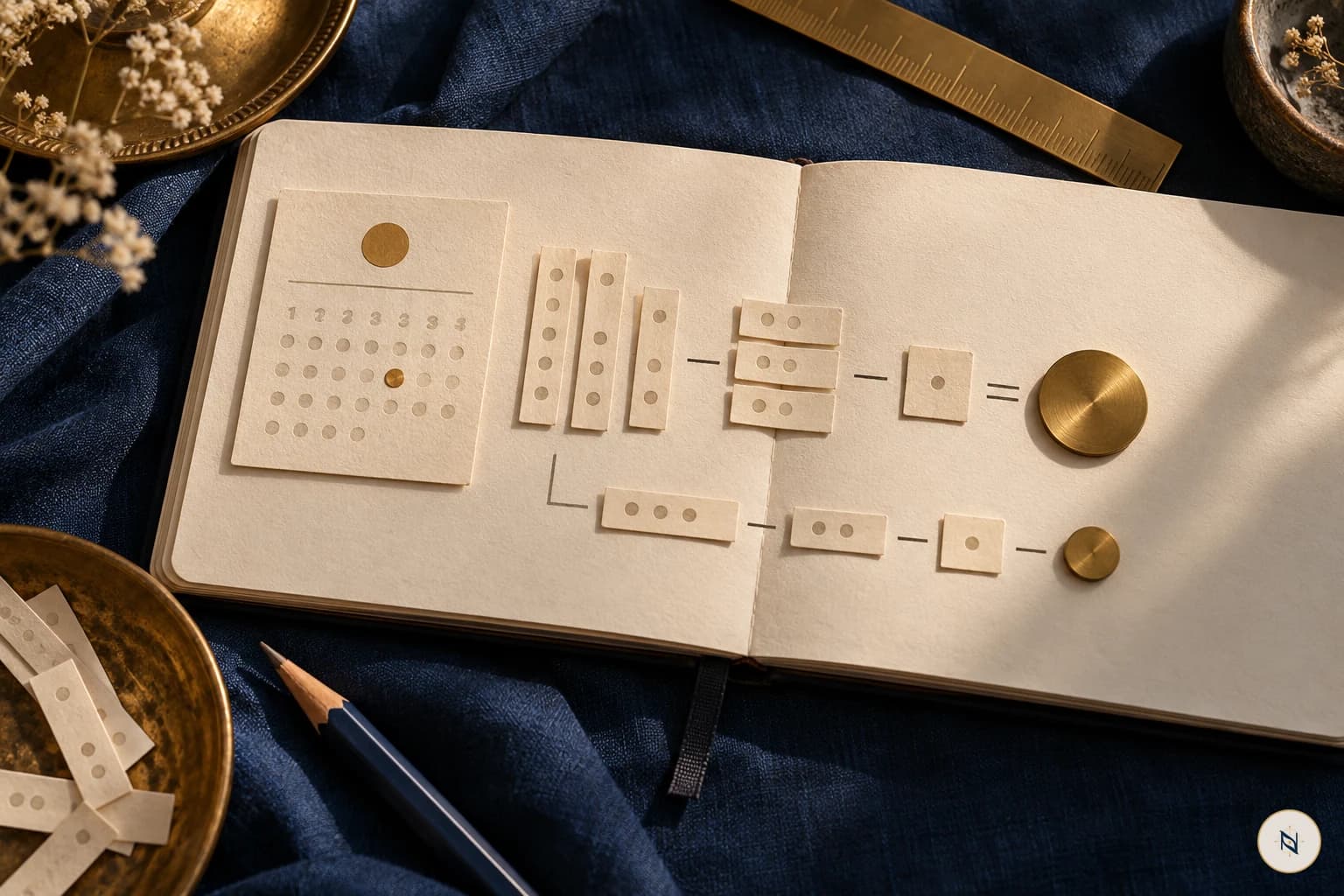
Core numbers & calculations·6 min
How to Calculate a Life Path Number (and Why Formulas Differ)
Calculate a Life Path number from a birth date, see every addition in a worked example, and learn how master-number conventions change the display.
Read the guide