
Name numerologyNumerology guide
Rational Thought Number: Add Your First Name and Birth Day
Calculate one Pythagorean Rational Thought number using the first name on the full birth record and the calendar birth day, then separate the practitioner interpretation from a real-world cognitive assessment.
The short answer
Start here
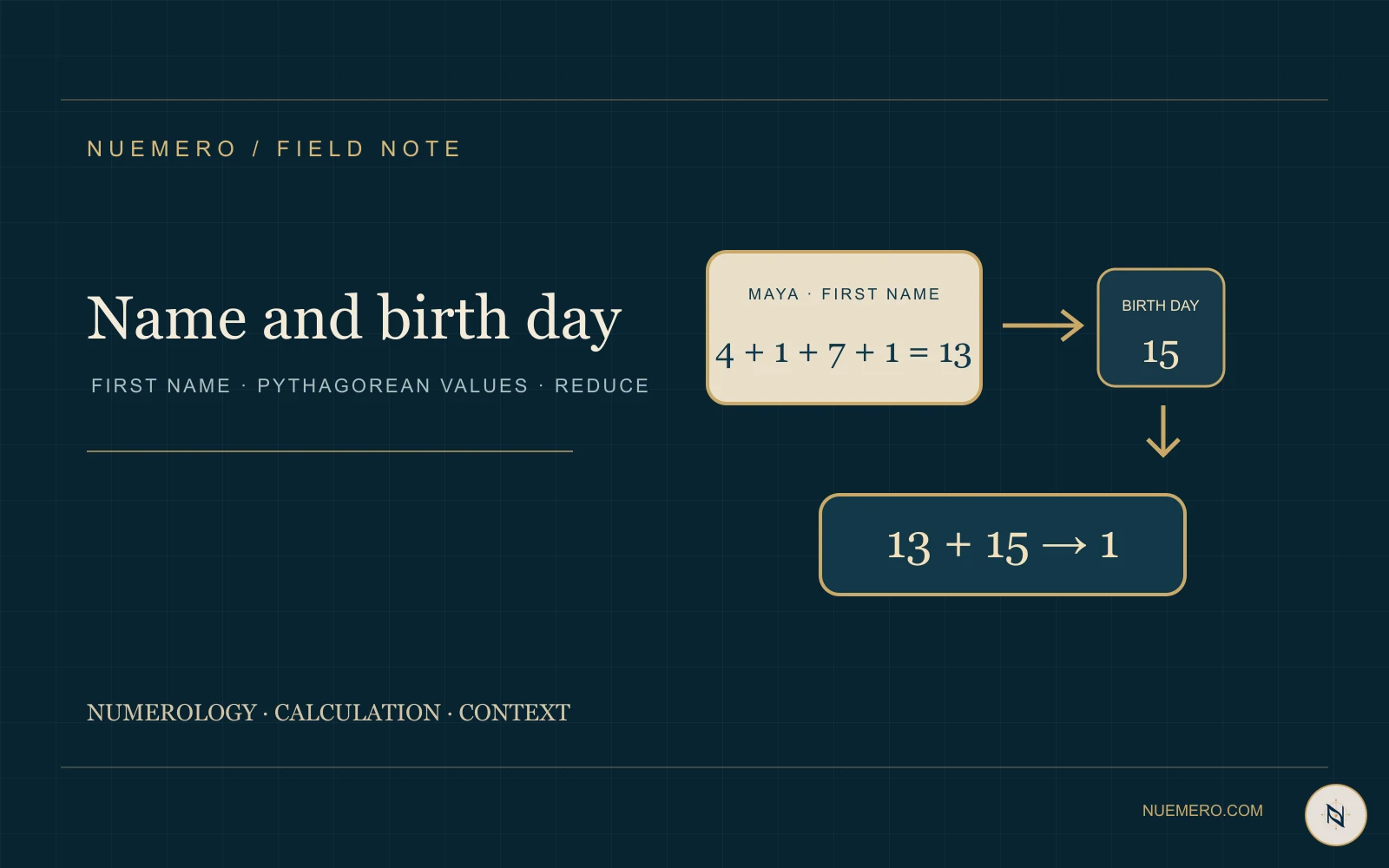
Hans Decoz’s Rational Thought method adds the Pythagorean value of every letter in the first name on the full birth name to the day of birth, then reduces the total to one digit; this calculation does not retain Master Numbers. For the fictional name Maya and a birth day of 15, Maya totals 13, so 13 + 15 = 28 → 10 → 1. The name input, table, and date should be shown. Claims that the result reveals a person’s thinking style belong to the practitioner tradition and are not a validated cognitive test.
Key takeaways
Use the first name from the full birth name plus the calendar day—not the whole birth date.
The cited Decoz rule reduces the final total to one digit and does not retain Master Numbers.
A traditional number reading does not measure reasoning, intelligence, or decision quality.
On this page
Identify both inputs first
The method described by Hans Decoz uses the full birth name’s first name and the day of birth. Map each first-name letter with the stated Pythagorean A–Z chart, add those letter values, add the calendar day, and reduce the result to one digit. The year and month are not part of this formula.
The reduction rule matters: the cited method does not preserve 11, 22, or 33 as Master Numbers here. A calculator that keeps a compound total or uses a different name form may produce a different display; state the convention instead of silently blending rules.
Worked example: Maya, born on day 15
Use a fictional person named Maya. In the Pythagorean chart, M=4, A=1, Y=7, and A=1, so the first-name sum is 13. Add the birth day 15: 13 + 15 = 28; reduce 2 + 8 = 10, then 1 + 0 = 1. The result is 1 under this source’s single-digit rule.
Maya · birth day 15 · fictional example
M(4) + A(1) + Y(7) + A(1) = 1313 + 15 = 282 + 8 = 10 → 1Keep the interpretation in its lane
Decoz describes the result as a traditional lens on a person’s thought process. That is the practitioner’s interpretation, not an assessment of intelligence, attention, reasoning ability, or how someone will make a particular decision. Do not use a numerology number to screen candidates, students, or clients.
If you use it as a reflection prompt, pair it with evidence from your real process: what information did you check, which alternatives did you compare, and what did the outcome teach you? The arithmetic can be checked; the symbolic claim needs a different kind of evidence.
Method and limits
This guide describes the conventions stated above and the way Nuemero’s current calculator works. Numerology interpretations are traditional beliefs, not scientific predictions. Check a source’s method before applying its meanings.
Read Nuemero’s full methodQuick answers
Frequently asked questions
How is Rational Thought calculated?
In the cited Decoz method, add the Pythagorean values of every letter in the first name on the full birth name to the birth day, then reduce to one digit. Master Numbers are not retained for this calculation.
Do I use my full name or first name?
The cited formula uses the first name from the full name at birth, not every name part. Another method may differ; identify the source.
Does this number scientifically describe how I think?
No. It is a traditional numerology interpretation, not a validated cognitive assessment. For questions about cognition, use appropriate professional or evidence-based assessment.
Read further
Sources and method notes
- Hans Decoz: The Rational Thought NumberPrimary practitioner source for the first-name plus Birthday-number formula and worked example.
- Hans Decoz: How to Do Your Own ReadingStates that the result reduces to one digit and Master Numbers do not apply in this method.
Sources document calculation conventions and claims made within their traditions. They are not evidence that numerology predicts real-world outcomes.
Name numerology·6 min
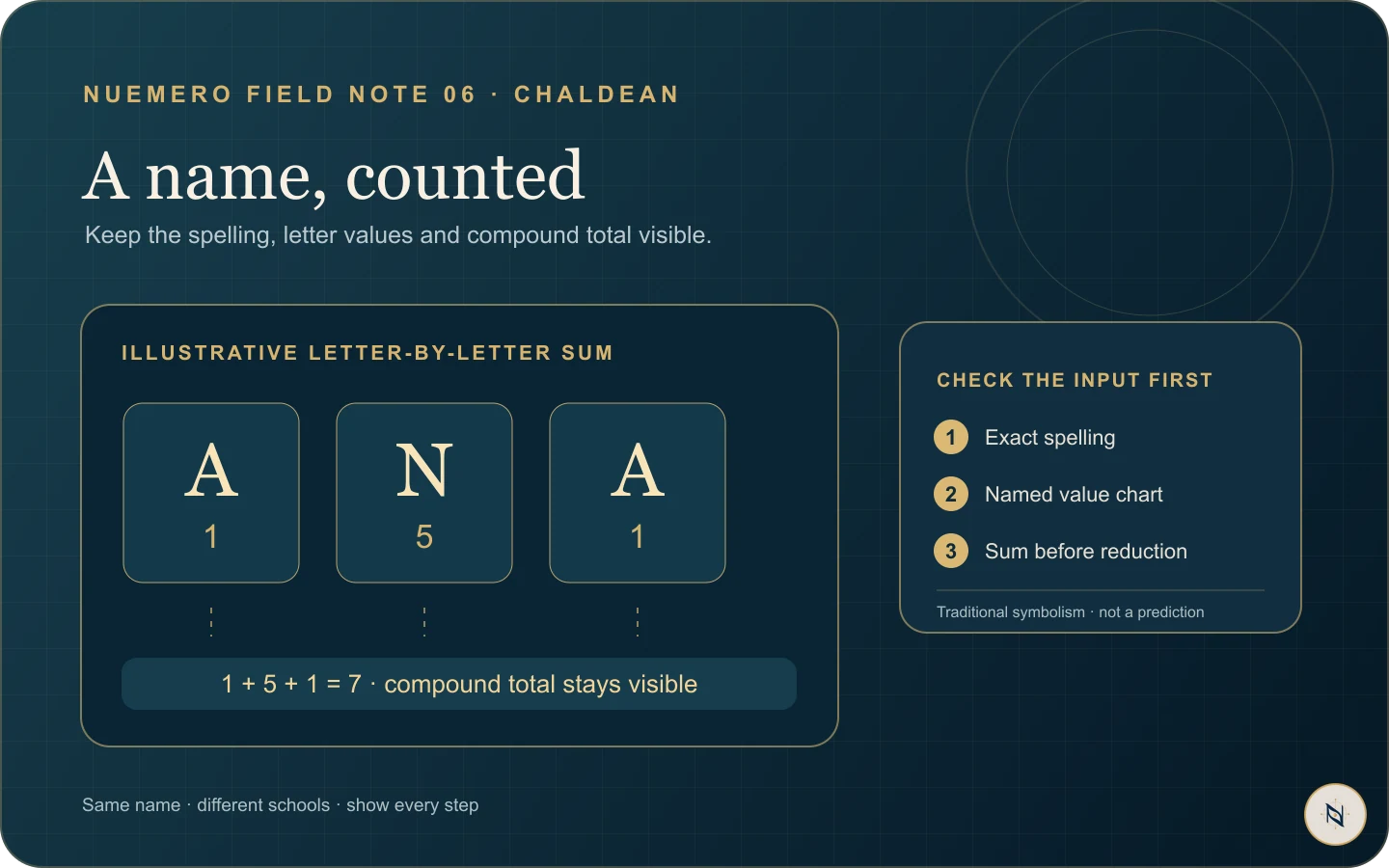
Chaldean Name Numerology: Letter Chart, Compound Total, and Calculation
Follow a Chaldean name calculation letter by letter, keep the compound total visible, and see why spelling and historical sources can change a reading.
Read the guide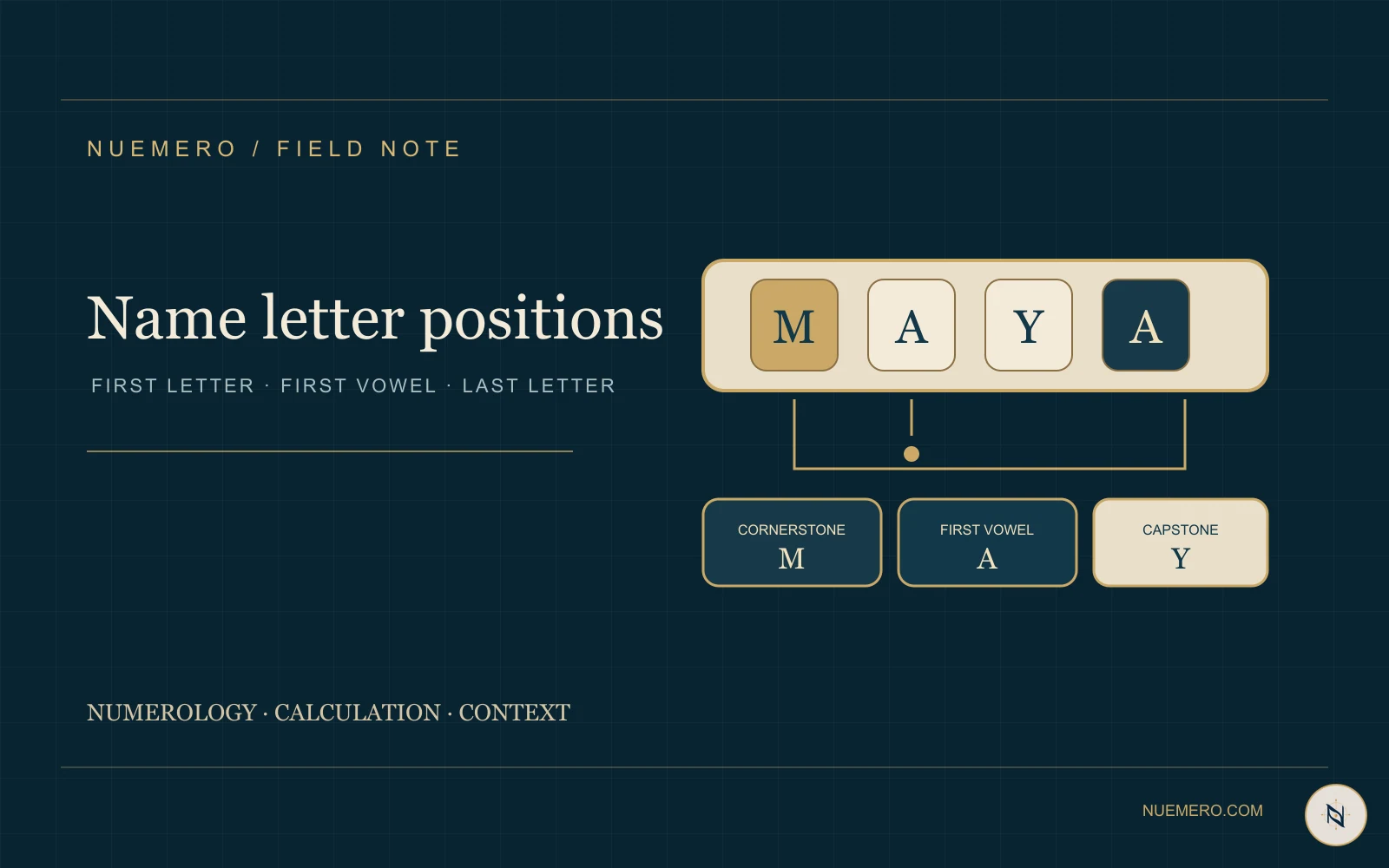
Name numerology·7 min
Cornerstone, Capstone, and First Vowel: Read Name Letters by Position
Identify the first and last letters of the birth first name and its first vowel under one practitioner chart, with a worked example and clear limits on personality claims.
Read the guide