
Name numerologyNumerology guide
Chaldean Compound Numbers 10–52: Read the Total Without Fear Claims
Understand why Chaldean name readings may preserve a compound total before reducing it, how sources differ, and why traditional descriptions are not forecasts.
The short answer
Start here
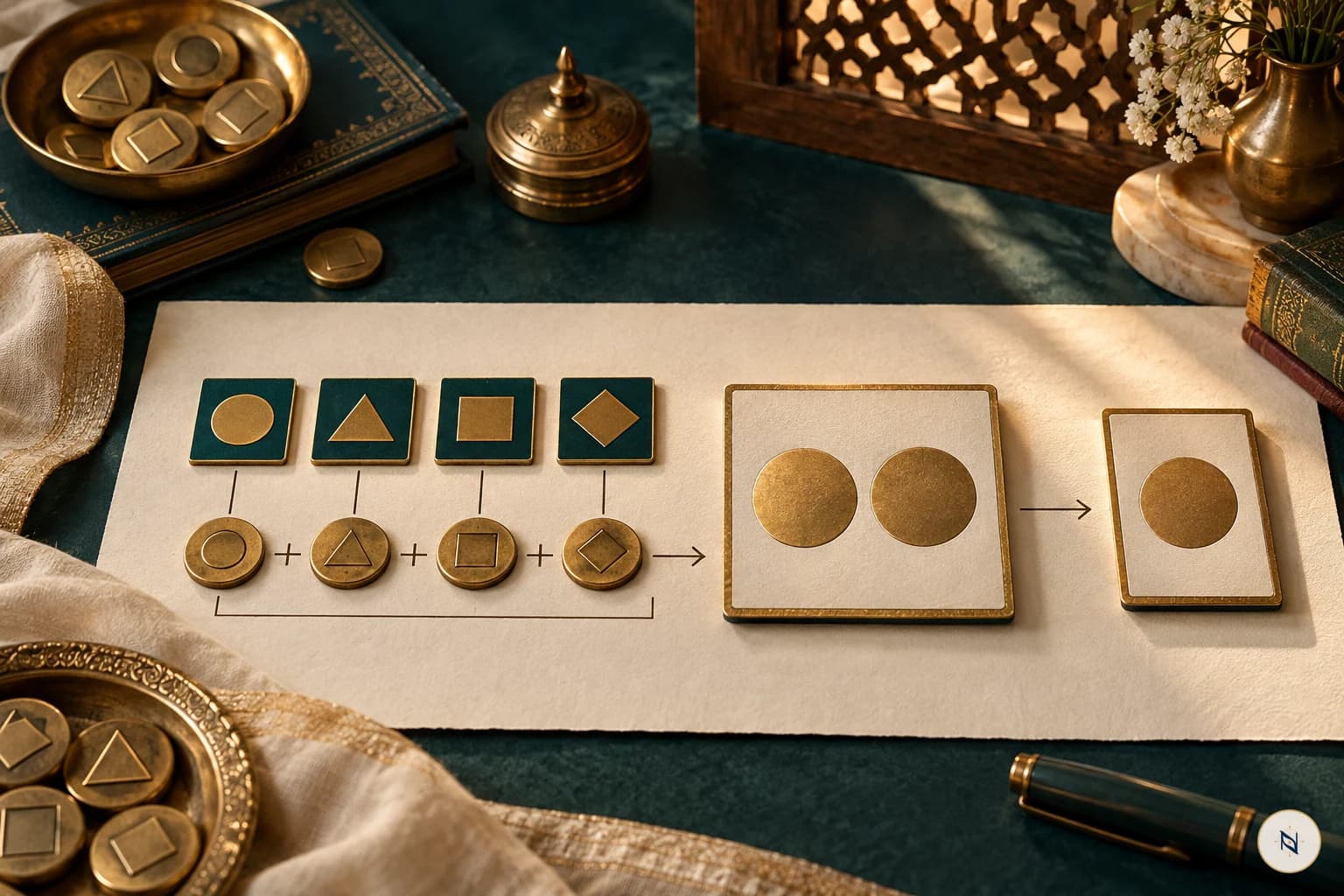
Some Chaldean name-reading sources interpret both a compound total and its reduced root; others differ in letter values, spellings, and descriptions. Preserve the raw sum, show the reduction, name the source, and avoid frightening claims that a number guarantees misfortune. An arithmetic total can be checked; its traditional symbolism is not a factual prediction.
Key takeaways
A compound total is the sum before reduction; retain it if the chosen source interprets it.
Letter tables and compound descriptions can differ between Chaldean sources.
Show the spelling, letter values, raw sum, and reduced root so the arithmetic is auditable.
Fearful descriptions are interpretations—not evidence of fate, danger, or a required name correction.
On this page
Keep the compound total visible
A letter-value method first assigns values to the exact spelling and adds them. Some Chaldean practitioners preserve the two-digit compound number, then also reduce it to a root. That is why a result such as 26/8 can have two labeled parts: raw total 26 and reduced digit 8. Do not discard the raw total when the stated method calls for it.
Separate arithmetic from symbolism
Using Nuemero’s Cheiro-derived Latin table, MAYA adds to 7 (M=4, A=1, Y=1, A=1); a Pythagorean table gives 13/4 for the same spelling. These are different calculations, not interchangeable verdicts. Chaldean compound interpretation should be sourced separately from the arithmetic.
Check the source; reject fear claims
Historical practitioner texts may attach vivid stories or warnings to compounds from 10 through 52, but lists are not fully consistent and their meanings are not scientifically validated forecasts. Attribute a description to the exact author and edition; never tell a reader they are doomed, unsafe, or obligated to buy a corrective service.
- Use the Chaldean calculator to inspect the exact letter values and compound sum.
- Compare the source’s compound description with another edition before relying on it.
- Treat the reading as optional reflection; ignore threats of inevitable misfortune.
Method and limits
This guide describes the conventions stated above and the way Nuemero’s current calculator works. Numerology interpretations are traditional beliefs, not scientific predictions. Check a source’s method before applying its meanings.
Read Nuemero’s full methodQuick answers
Frequently asked questions
What is a Chaldean compound number?
It is the unreduced sum from a named letter-value calculation; some sources interpret it alongside its reduced root.
Do all Chaldean sources interpret 10–52 the same way?
No. Letter conventions and compound descriptions can differ. Name the author or edition for an interpretation.
Does a compound number predict misfortune?
No verified prediction follows from the arithmetic. Traditional warnings are beliefs, not established evidence of fate.
Why keep both 26 and 8 in a 26/8 result?
26 is the compound sum and 8 is its reduced root under that convention. They are different stages, so label both.
Read further
Sources and method notes
- Nuemero methodologyReview the Chaldean letter table and compound-total convention.
Sources document calculation conventions and claims made within their traditions. They are not evidence that numerology predicts real-world outcomes.
Name numerology·8 min
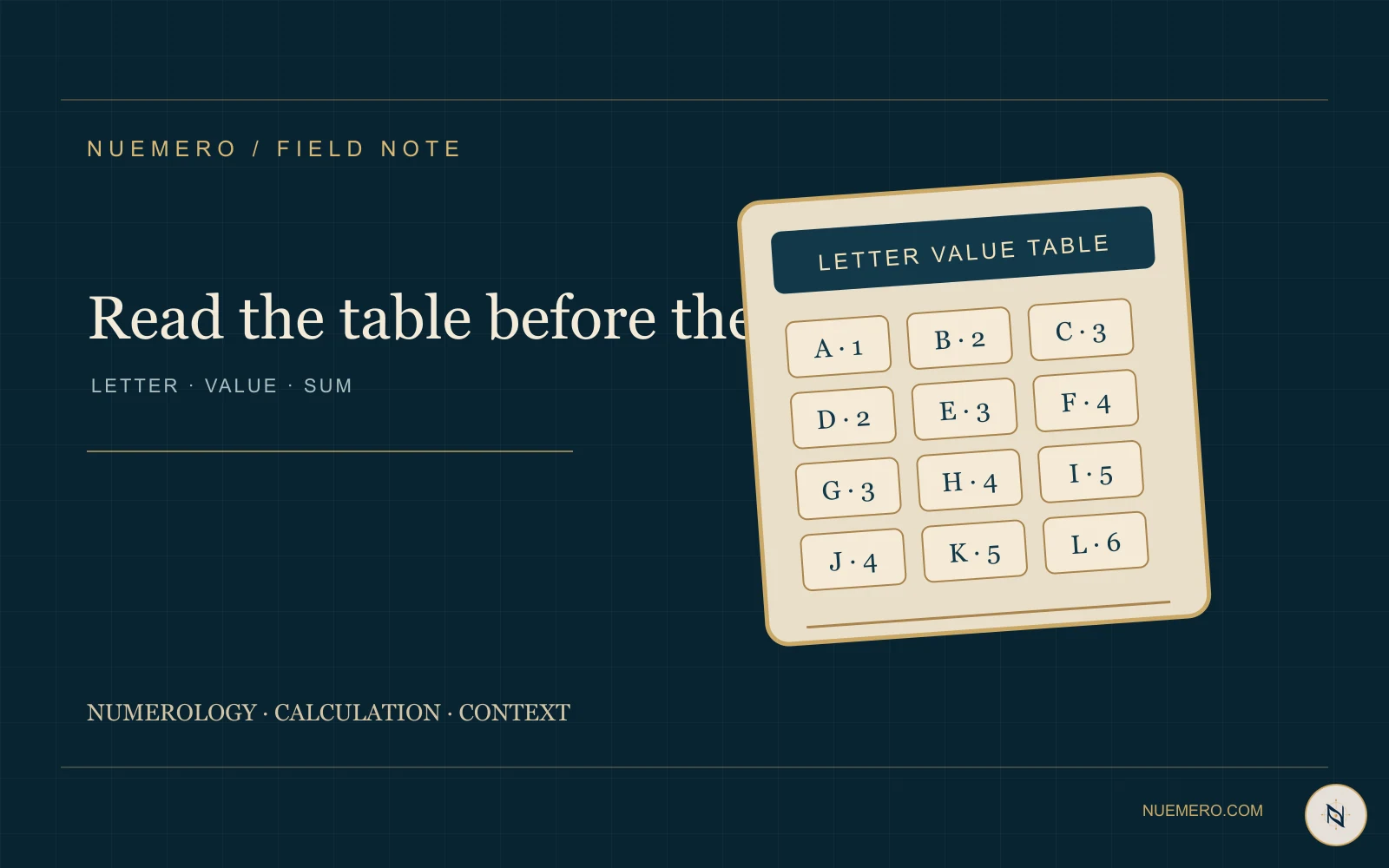
Chaldean Numerology Letter Chart A–Z: Values, Name Example, and Limits
Review the commonly printed 1–8 Chaldean-style letter table, calculate a fictional name, and distinguish Cheiro’s published scheme from claims of ancient origin.
Read the guide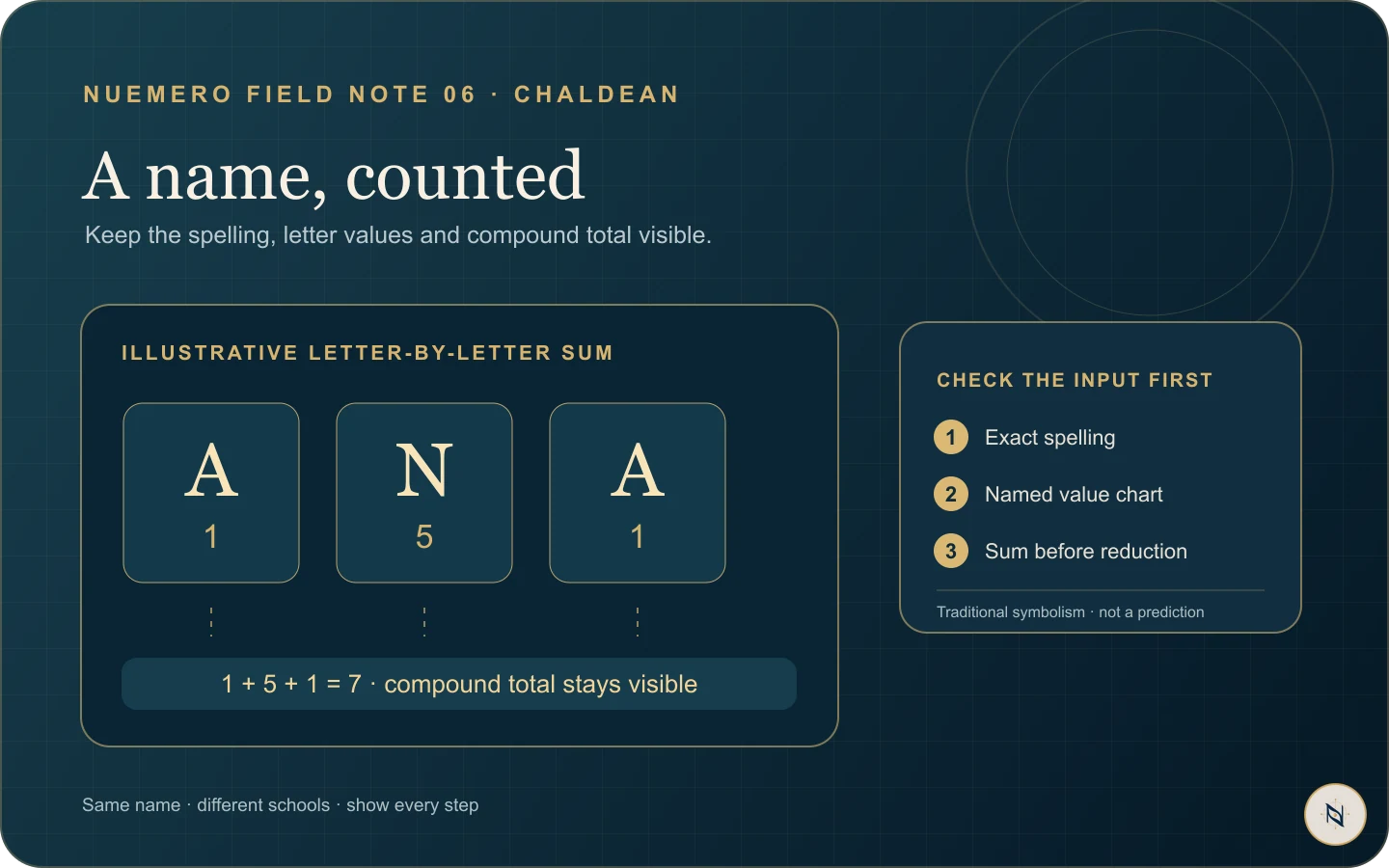
Name numerology·6 min
Chaldean Name Numerology: Letter Chart, Compound Total, and Calculation
Follow a Chaldean name calculation letter by letter, keep the compound total visible, and see why spelling and historical sources can change a reading.
Read the guide