
Core numbers & calculationsNumerology guide
Indian Numerology: Traditional Planet Associations for Numbers 1–9
Review one commonly published Indian numerology mapping from numbers to planets, note where traditions vary, and keep symbolic correspondences separate from an astrology chart.
The short answer
Start here
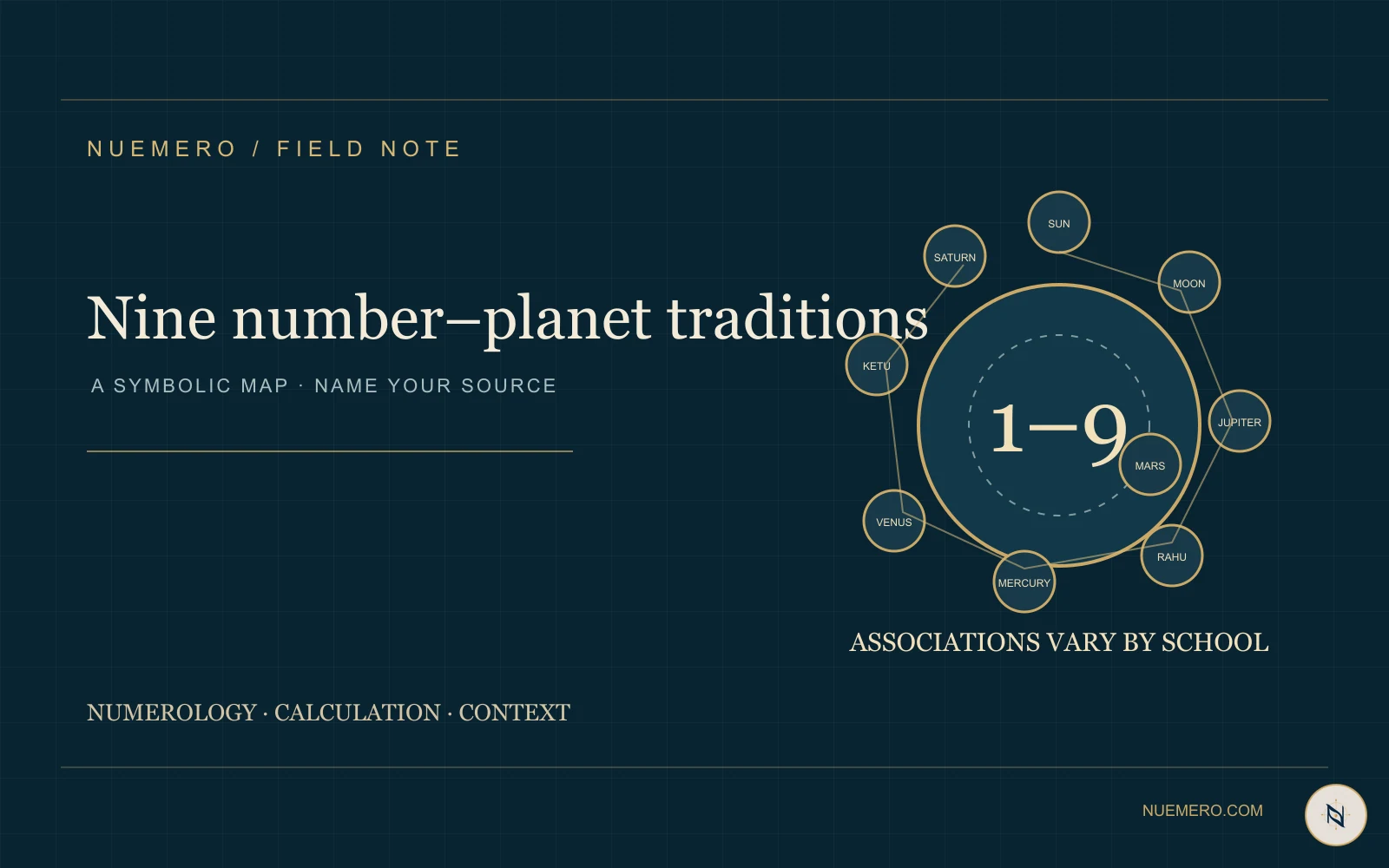
One Indian numerology chart commonly associates 1 with the Sun, 2 Moon, 3 Jupiter, 4 Rahu, 5 Mercury, 6 Venus, 7 Ketu, 8 Saturn, and 9 Mars. These are symbolic correspondences used by particular practitioners, not a universal table: other sources may differ, especially for 4 and 7. A birth number does not calculate a planet's astronomical position or replace a Jyotish birth chart. Always name the source and use the list as a tradition-specific reference, not a personality diagnosis or prediction.
Key takeaways
A commonly published mapping is 1 Sun, 2 Moon, 3 Jupiter, 4 Rahu, 5 Mercury, 6 Venus, 7 Ketu, 8 Saturn, 9 Mars.
Planet labels vary by school; publish the source and convention beside the table.
Numerology correspondences do not identify planetary positions or verify future outcomes.
On this page
A commonly published 1–9 table
The mapping used in this guide is Sun, Moon, Jupiter, Rahu, Mercury, Venus, Ketu, Saturn, and Mars for 1 through 9 respectively. The cited Indian press overview uses this sequence. Treat it as one named source's presentation; a chart that substitutes Uranus or Neptune, or handles Rahu and Ketu differently, is using another convention.
A number–planet correspondence is not the same as computing a planet's position from birth time and place. Astrology uses a chart calculation with astronomical positions; numerology assigns a symbolic planet label within its own rule set. Keep those two operations distinct when explaining a reading.
How to compare two planetary charts
Write down the source, what number it maps (birth-day root, full-date total, or name total), and whether it uses Rahu/Ketu or other labels. Then compare like with like. A table that maps a reduced day number cannot be silently substituted for one that maps a full-date number.
If a reader offers a colour, day, or gemstone alongside a planet, ask which source links those items. Do not treat such suggestions as medical, financial, or safety advice, and do not buy a costly remedy on a promised result.
Method and limits
This guide describes the conventions stated above and the way Nuemero’s current calculator works. Numerology interpretations are traditional beliefs, not scientific predictions. Check a source’s method before applying its meanings.
Read Nuemero’s full methodQuick answers
Frequently asked questions
Which planet is linked with number 4?
The cited Indian table links 4 with Rahu. Other numerology schools may use a different association, so name the chart you are following.
Is number 7 ruled by Ketu or Neptune?
It depends on the tradition. The Indian mapping cited here uses Ketu; some Western-oriented charts use Neptune. They should not be blended without saying so.
Does a number's planet describe my birth chart?
No. It is a symbolic association in a numerology method. A natal astrology chart requires its own date, time, place, and astronomical calculations.
Read further
Sources and method notes
- The Times of India: Ruling numbers and their planetsExample of the 1–9 planetary sequence described as a numerology tradition.
- AIFAS Research Journal: Importance of Compound NumbersPractitioner-authored discussion showing that number–planet meanings are tradition-specific interpretations.
Sources document calculation conventions and claims made within their traditions. They are not evidence that numerology predicts real-world outcomes.
Core numbers & calculations·7 min
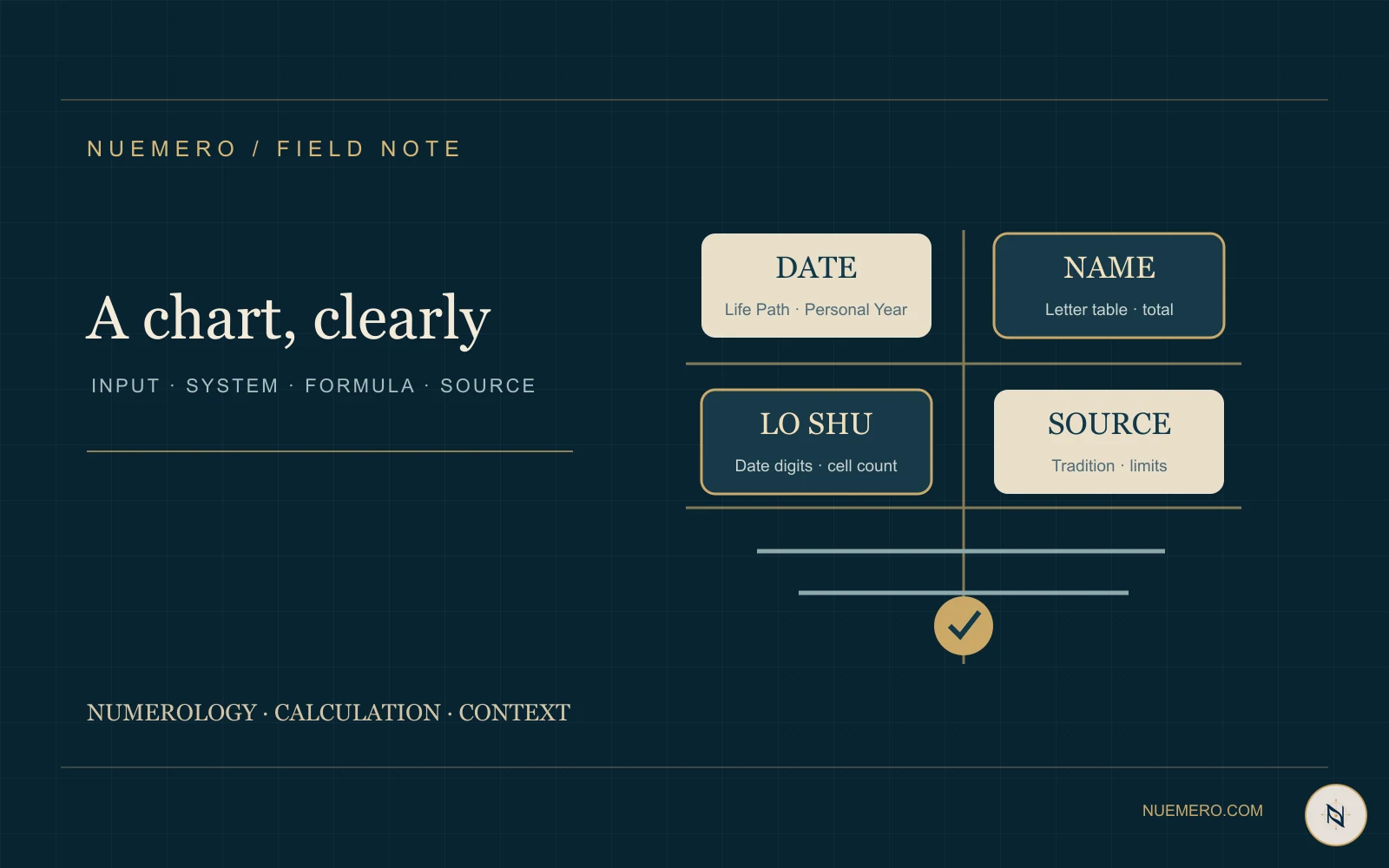
How to Read a Full Numerology Chart Without Mixing Methods
Use a practical checklist to label each chart number by input, formula, tradition, and reduction rule before considering its traditional interpretation.
Read the guide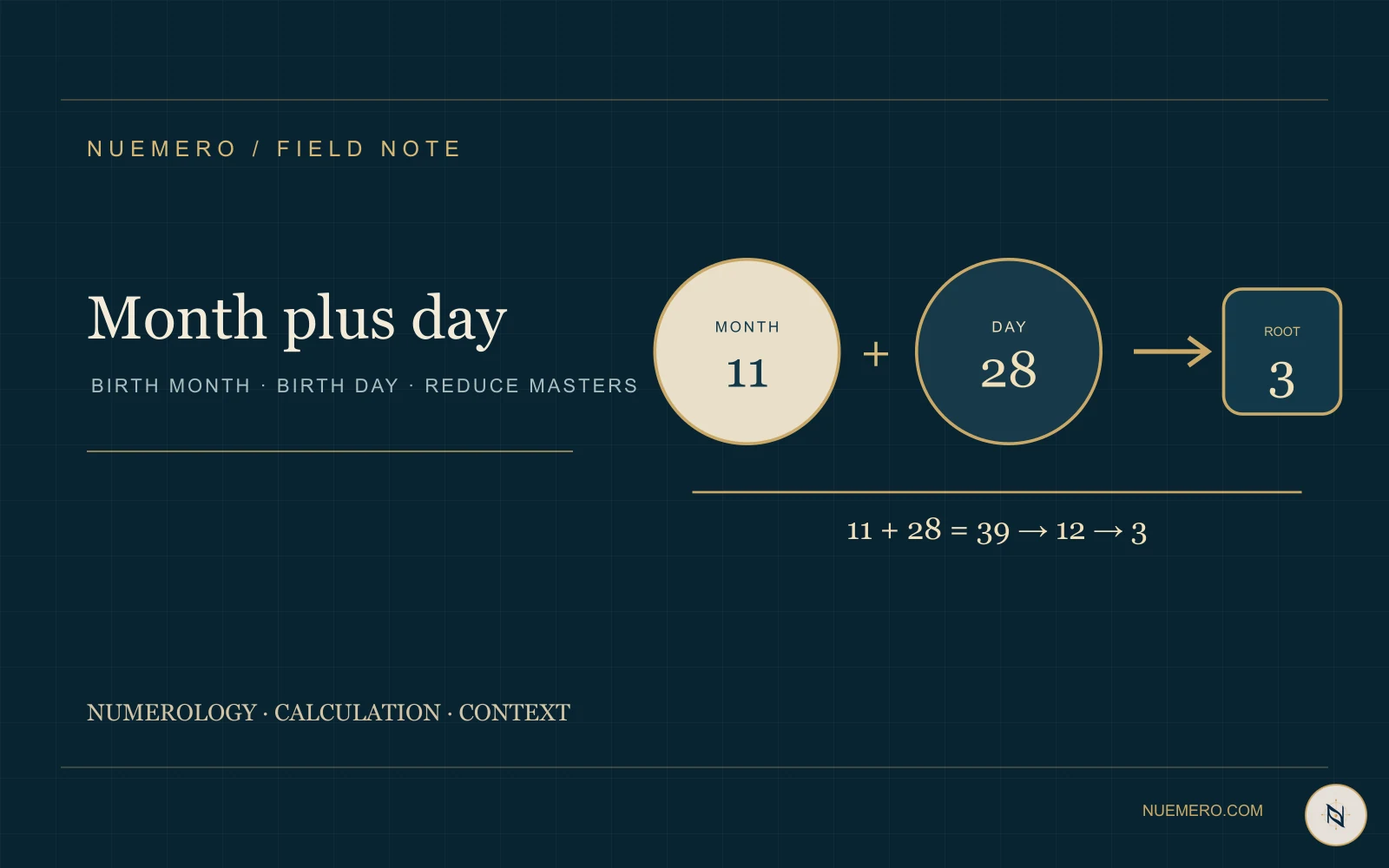
Core numbers & calculations·7 min
Attitude Number: Add Birth Month and Day, Then Reduce
Calculate the Decoz Attitude Number from birth month and day, see how its arithmetic matches the First Pinnacle input, and keep their chart interpretations distinct.
Read the guide