
Cycles & timingNumerology guide
Personal Month and Personal Day Numbers: A Transparent Calculation
Follow one stated calendar-year method from Personal Year to Personal Month and Day, with a worked example and a reminder that timing themes are symbolic.
The short answer
Start here
One calendar-year approach derives a Personal Month by adding the reduced Personal Year and calendar month, then derives a Personal Day by adding the month result and date. Schools may use different boundaries or reduction rules. State the convention. A result is a symbolic planning prompt, not evidence that a date will cause an event.
Key takeaways
State the calendar-year convention and reduction rule before showing a Personal Month or Day.
With Personal Year 4, August 8 gives month 3; date 12 then gives day 6 under this example rule.
The arithmetic can be checked; symbolic timing meanings are traditional interpretations.
Use availability, deadlines, cost, safety, and evidence for real scheduling decisions.
On this page
Choose the cycle convention
Timing systems may begin on 1 January, on a birthday, or at another point defined by a school. This guide uses the calendar year and reduces intermediate sums to 1–9. Keep the convention visible so readers can reproduce it.
Calculate the month and day
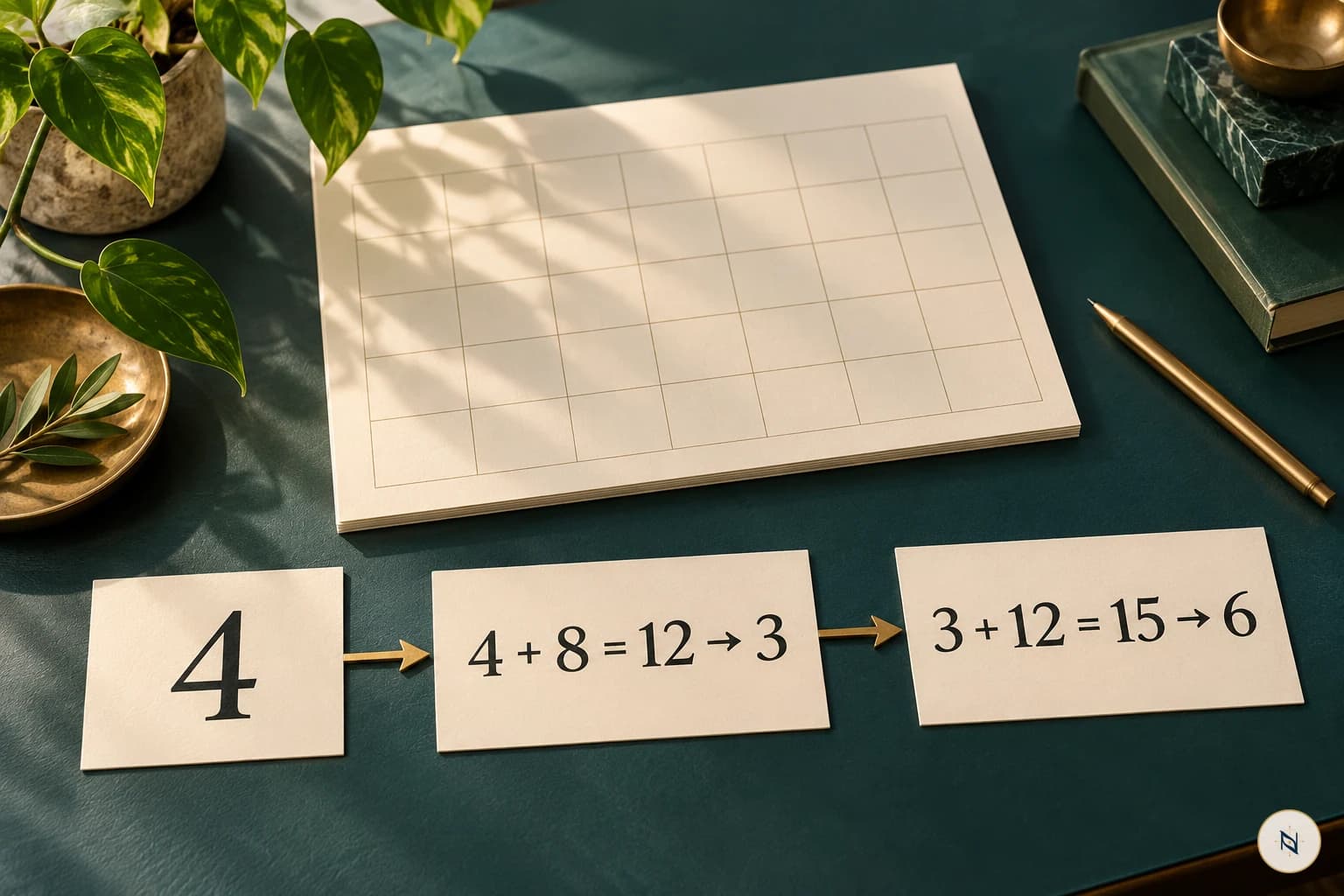
For a Personal Year 4 and August (month 8): 4 + 8 = 12, then 1 + 2 = 3. The Personal Month is 3 under this convention; this is an arithmetic example, not a prediction for August.
Illustrative calendar-year example
44 + 8 = 12 → 1 + 2 = 33 + 12 = 15 → 1 + 5 = 6Use timing themes lightly
For 12 August, add month result 3 and date 12: 3 + 12 = 15, then 1 + 5 = 6. Treat any traditional association as a journaling cue, not proof that a meeting or purchase will succeed.
- Use the personal-cycles calculator to inspect the year, month, and date inputs together.
- Write down the method and repeat it for every date you compare.
- Use the number as optional reflection; do not delay health, legal, or safety needs for it.
Method and limits
This guide describes the conventions stated above and the way Nuemero’s current calculator works. Numerology interpretations are traditional beliefs, not scientific predictions. Check a source’s method before applying its meanings.
Read Nuemero’s full methodQuick answers
Frequently asked questions
How is a Personal Month calculated?
In this calendar-year example, add the reduced Personal Year and calendar month, then reduce. Other schools may differ.
How is a Personal Day calculated?
Under the example rule, add the Personal Month to the day of the month and reduce; state the convention because it is not universal.
Does it identify the best day for a decision?
No verified evidence establishes that numerology timing causes outcomes. Use practical criteria for decisions.
Why do timing calculators differ?
Cycle boundaries, reduction rules, and addition order can differ. Compare these before interpretations.
Read further
Sources and method notes
- Nuemero personal cycles calculatorReview a timing convention and its arithmetic.
Sources document calculation conventions and claims made within their traditions. They are not evidence that numerology predicts real-world outcomes.
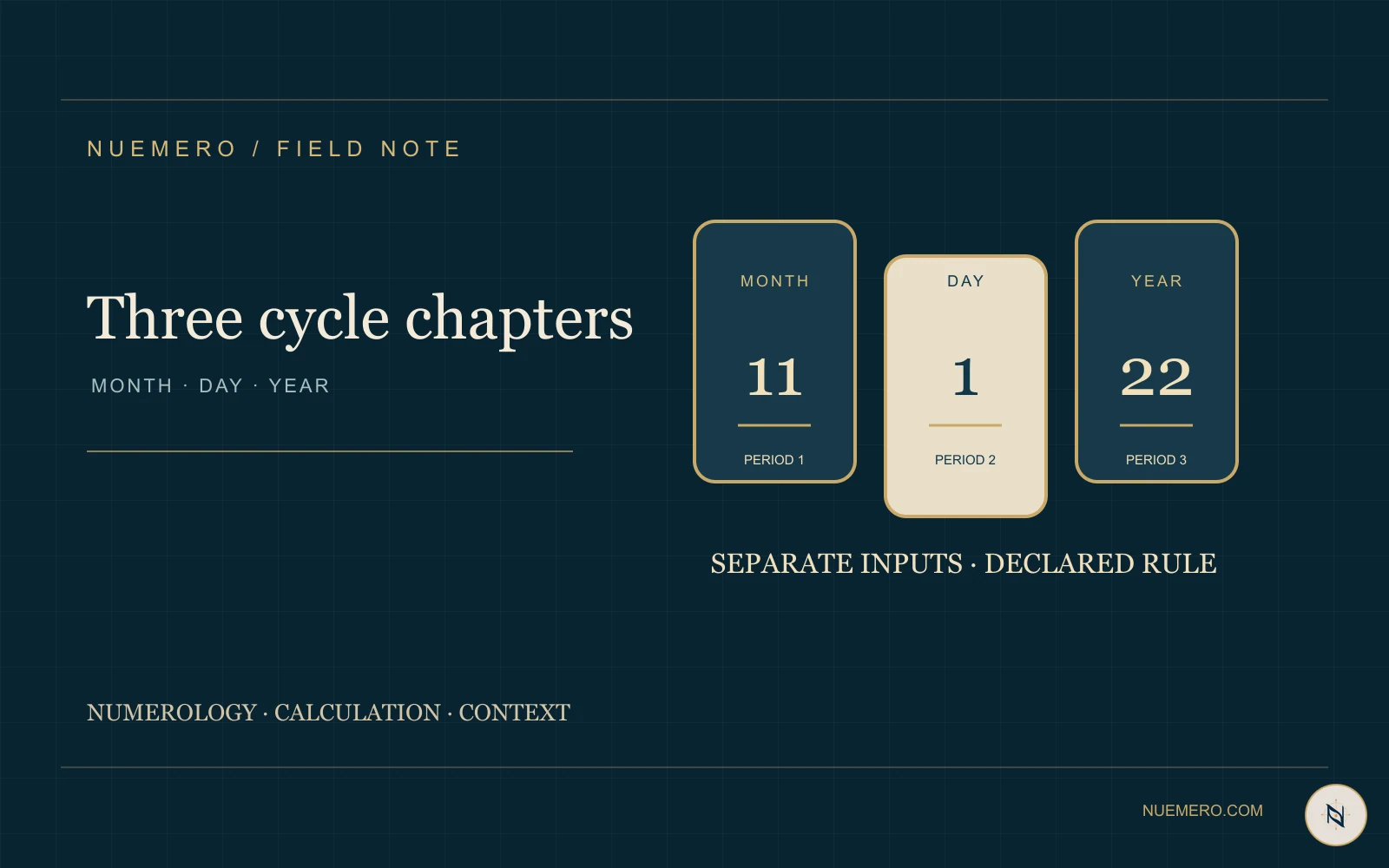
Cycles & timing·8 min
Period Cycles in Numerology: Calculate the Month, Day, and Year Numbers
Work through a three-part Period Cycle chart from birth month, day, and year, distinguish its inputs from Pinnacles, and check how one source defines the transition ages.
Read the guide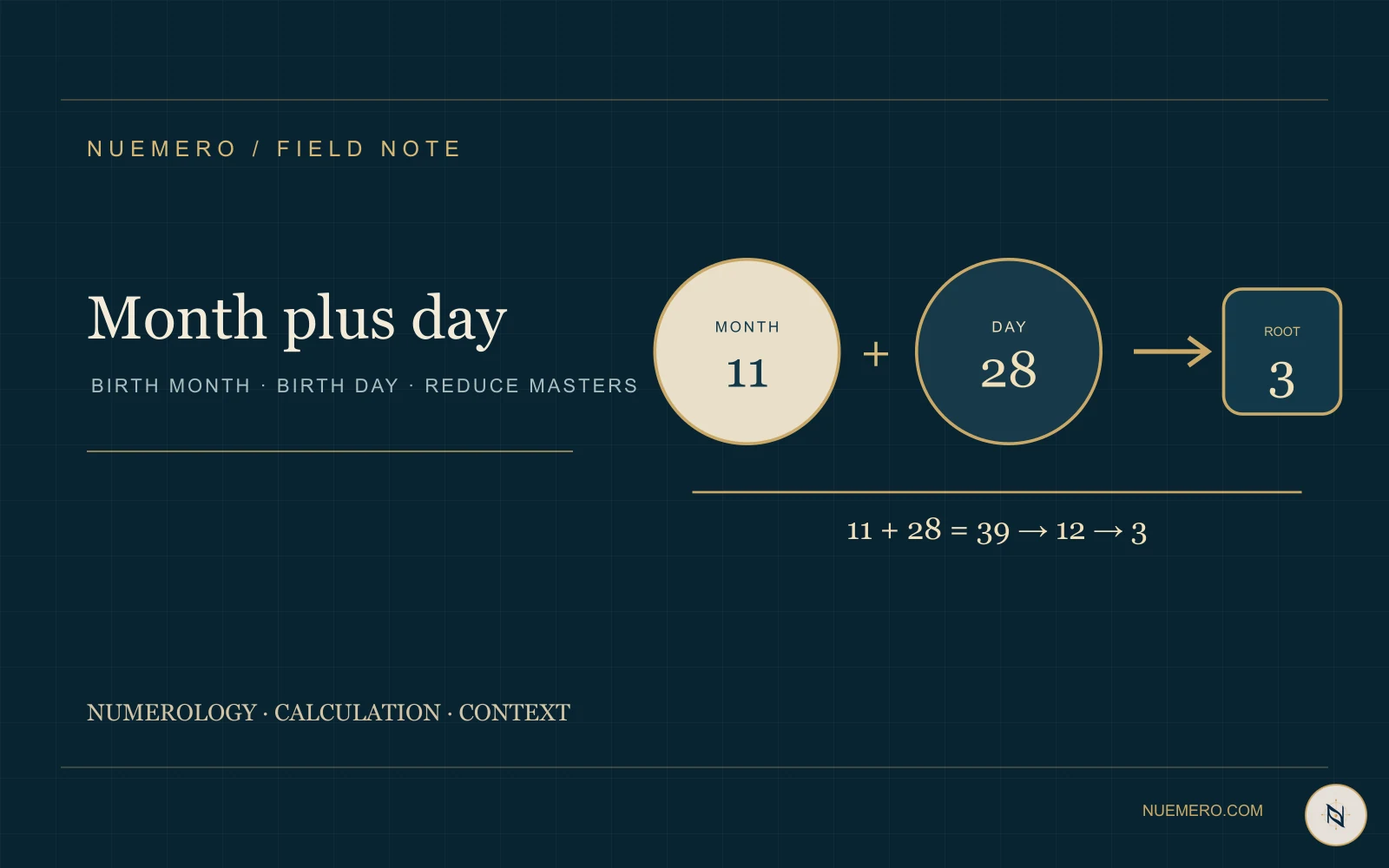
Core numbers & calculations·7 min
Attitude Number: Add Birth Month and Day, Then Reduce
Calculate the Decoz Attitude Number from birth month and day, see how its arithmetic matches the First Pinnacle input, and keep their chart interpretations distinct.
Read the guide